Don’t Fear Twitter

Okay, I’m going to do it. I’m going to start tweeting. Do you tweet? Are you thinking about it? If you’re a newbie, don’t fear Twitter. That’s some of the advice I heard as part of a panel presented by Social Media Summit.

Who to Follow…

Brian Clark (@copyblogger) suggests following people “relevant to what you are about and what your business is about.” He also suggests sharing more than just the content you have on your blog. “Sharing is a sign of status on the web,” he says.

Chris Brogan (@ChrisBrogan) suggests listening for a bit before deciding who to follow. And he strongly recommends against sucking up to the big names, such as Ashton Kutcher. It’s not going to get you more followers.

Keeping up with Tweets…

Chris says you don’t have to read every tweet. (Halleluiah!) Even if you tried, he says there is no way to keep up with all the tweets.

He recommends using tools, such as TweetDeck, which is a personal real-time browser. You can also use Twellow, a directory of public Twitter accounts. And don’t forget TwitterSearch. 

Connecting…

Twitter is more than simply sending out 140 characters. Chris says it’s about building relationships and connecting. That’s why the @ replies are so important.

Says Darren Rouse (@Problogger), “Twitter is a relationship building tool.”

Are you ready to connect?
Social Media Much Like a Triathalon

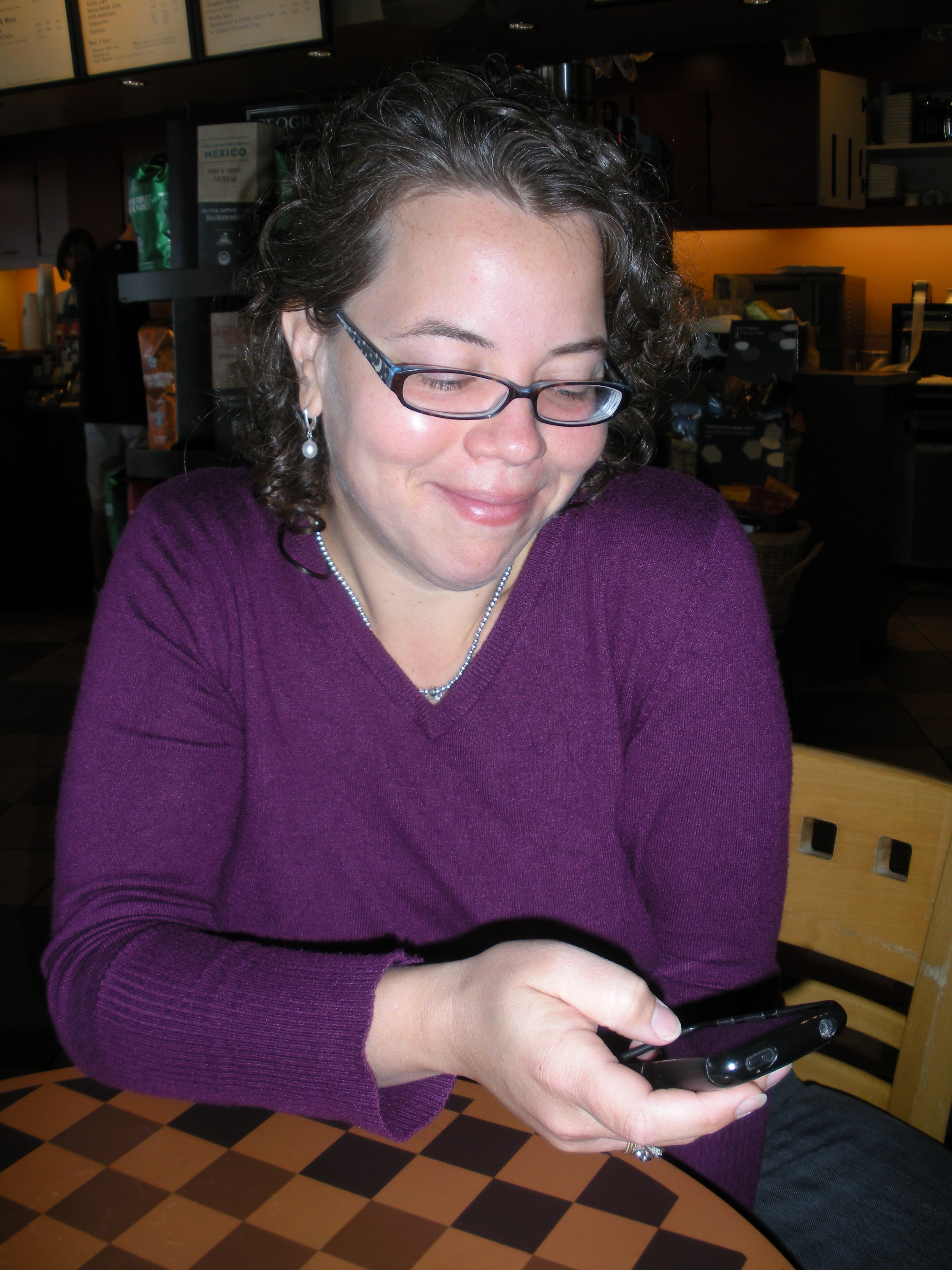
Jonah Holland won a Shorty Award, which honors the best people and organizations on Twitter. She won for her work with Lewis Ginter Botanical Gardens in Richmond.

She’s passionate about gardening, but she’s also passionate about triathalons, which is initially how she became active in social media.

“I think people are best at social media when it’s completely based on their own passion,” she said during an interview at a coffee shop. “That’s how I came at it.”

She started blogging about triathalons and then expanded, including her gig with Lewis Ginter.

She first learned of the Shorty Awards last year, and this year she thought “it seemed like something that could be in reach.”

Voting for the awards is public by the Twitter community, and Jonah noted that the Richmond community was key in her and Lewis Ginter’s win.

Jonah likens social media to a triathalon. “You set a goal and you don’t know if you can attain it but you’re going to see it through,” she said.

For those new to social media, she recommends not starting with Twitter, but rather with a blog. “Twitter is just microblogging,” she said. “Blogging gets you in the right mind set to tweet. At first it can be confusing and nonsensical.”

But after some time blogging and posting to Facebook, Twitter allows a person to complete the social media piece.

Whichever platform you choose to begin with, Johan says, “Start with you passion because without passion you really don’t have very much. You have to feel strongly to have a clear voice.”

At Lewis Ginter, Jonah’s blog posts often start out as emails to friends. She uses Twitter to help promote the blog and connect other people who would be interested in the blog – and the gardens.

She enjoys writing about Lewis Ginter because she finds that plants “are a connection to your past,” she said. “I find meaning in plants. They remind you of certain times and people in your life.”

Snapdragons, for example, remind her of her Nana Ruby.

As she continues to pave the way in social media, Jonah said she’ll incorporate more video. She also will continue to partner with people. “You have to find like minded people and band together,” she said. “It’s important to work together.”

Ultimately, Jonah said it’s about “adding value to the community and reinforcing the connections.

Tweeting Your Way to Media Placements

Twitter is all about following, and when it comes right down to it, that’s what media relations is about – getting someone to follow you, your company, your product so that, ultimately, they will write about it.

Twitter offers some great media relations tactics.

1) Follow journalists, bloggers and influencers. You’ll learn what they are writing about and what is of interest to them.

2) Showcase your expertise. Once you learn in what the journalists, bloggers and influencers are interested, you can showcase your expertise. We did that at my organization and landed one of our vice presidents on a blog radio segment. It gave the person exposure in a fairly benign setting, provided the blogger with an expert and gave us a great Google search hit.

3) Respond to requests. If you’re on Twitter and someone asks for information, and you can provide it, do so. It’s the same as when a reporter calls you on the phone. Same idea, different technology.

4) Write good headlines. When you’re on Twitter you’re limited to 140 characters. Before long you’ll find that the headlines you are writing are shorter, crisper, edgier.

Leaping into Social Media

PR is undergoing dramatic changes in large part because of the social media landscape. So what does the future look like? Vocus, which offers on-demand software for public relations management, recently released its “PR Planning 2010 Survey Results.”

When asked what is the single most important thing you, as a PR professional, will do differently in 2010 than you did in 2009, Vocus reported that social media was referenced nearly 600 times of the 1,571 responses.

So what can you do if you are one of the few who hasn’t leapt into social media?

Start by experiencing the applications.

LinkedIn allows you to connect professionally. You develop your network. You post your resume. You comment on professional questions. You write recommendations for others. All of these activities place your skills and experience where it can be viewed by others.

Facebook can be social or professional. For many it’s simply a way to stay in touch with far-flung friends. But even when you’re doing that, you are learning how to monitor the conversation.

Start a blog. It’s free and easy and no experience is necessary. I did some research before I started mine. I thought about who my audience would be. For me it was primarily the NFPW membership, but also potential members. Once I knew that, I knew I wanted to focus on communications and the changing field. And really, my focus is more on integrating traditional and new media. I set a schedule. Then I started. I’m learning as I go.

Twitter is a microblog. In 140 characters you can share a message. It’s not easy to keep up with everything. It can be quite distracting. The younger generation seems fine with it. One thing I’ve learned from microblogging is how to write tight and how to convey my message succinctly – something we could all benefit from.

So as you start 2010 and think about your professional goals, think about where you might leap into social media.

Reading to Learn about New Media

Who says books are going the way of the dinosaur? Sure, there are Kindles and Readers, but when you’re working at your computer trying to figure out Facebook, SEO or just what the next big communications trend will be, a book is a helpful and welcome tool.

Since I’ve been writing about social media frequently since starting this blog, I wanted to share five books that you might find of interest.

1) “Tribes: We Need You to Lead Us” by Seth Godin makes clear that the Web has eliminated the boundaries that often prevent tribes from forming.  Now that any group can become a tribe, who is going to lead them?

2) Twitterville: How Business Can thrive in the New Global Neighborhoods by Shel Israel shares revealing stories of Twitterville residents. On Twitter, which is dominated by professionals, word spreads quickly.

3) “Now Is Gone: A Primer on New Media for Executives & Entrepreneurs” by Geoff Livingston with Brian Solis started as a way for Geoff to share the epiphanies he had with regards to the changing communications landscape. I met Geoff about six months ago and then worked with him on a Twitter campaign.

4) “The New Community Rules: Marketing on the Social Web” by Tamar Weinberg will help you understand how social web technologies work, and learn the most practical and effective ways to reach people who frequent these sites.

5) “The Truth about Search Engine Optimization” by Rebecca Lieb is the book for you if you don’t know what SEO stands for. This book isn’t going to give you the technical know-how you’ll need but it is easily digestible and gives you and idea of what you need to do with respect to SEO.