Who You Gonna Call? Not a Reporter

At a recent conference where participants heard from about a dozen reporters, I heard a repeated refrain by the reporters – “Don’t call me.”

They all said their mailboxes were full and that they couldn’t keep up. One said he kept his phone muted.

Reporters prefer email or a tweet to a phone call. (Photo by Cynthia Price)

Reporters prefer email or a tweet to a phone call. (Photo by Cynthia Price)

The preferred method to reach reporters was email, followed closely by Twitter.

“Twitter is a quick way to reach people and find stories,” said Bill Schackner, higher education reporter for the Pittsburgh Post-Gazette.

Karen Travers, a correspondent for ABC News, said, “I never answer my phone. I’m never at my desk.” She most recently was the digital reporter covering the Obama White House, traveling across the United States and to nearly 20 foreign countries with the president.

“I am often impatient with phone calls,” said Richard Perez-Pena, the higher education reporter for the New York Times, during another session. “Emails should always be the default position.”

One reporter’s email signature has the notation, “Phone number available upon request.”

I don’t have an issue with the approach. In fact, I would like reporters to do the same. I’m seldom at my desk but my tablet or mobile is always with me. If the reporter sends me an email, I’ll see it long before I get back to my desk, and I can begin working on the request.

It doesn’t matter what tool we use to communicate. It does matter that we communicate.
 

Why Media Training Is Important


If you are involved in promoting your organization using key staff, you may want to consider media training for them.

Media training helps the person communicate effectively, minimizes risk and provides positive PR for the person giving the interview and the organization, according to Candace Smith, assistant vice president for media relations for George Washington University in Washington, D.C.

Media training also has benefits beyond the media interview. Such training improves presentations and builds confidence.

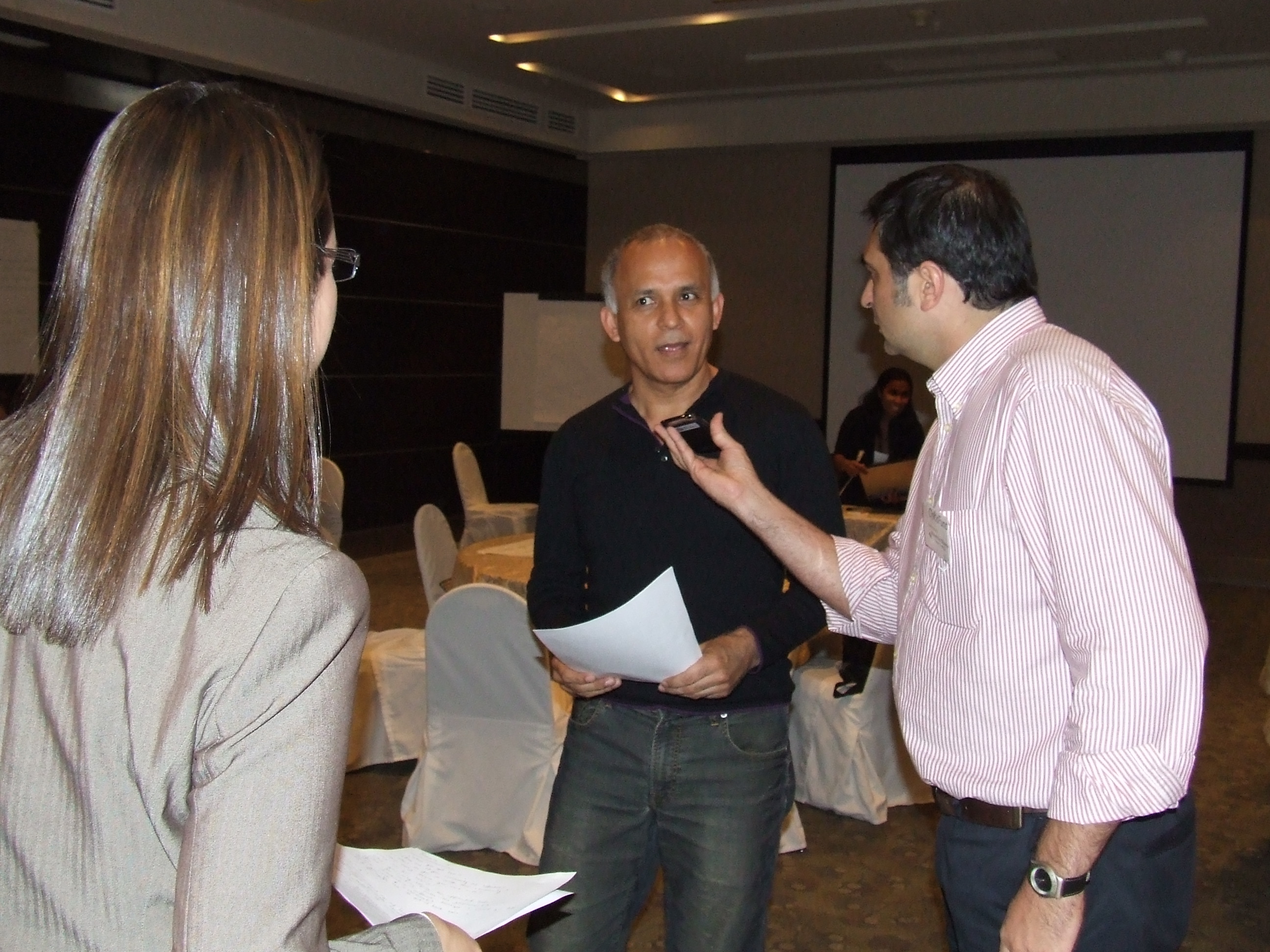
During a mock interview, a journalist uses a smartphone to conduct the interview. (Photo by Cynthia Price)

During a mock interview, a journalist uses a smartphone to conduct the interview. (Photo by Cynthia Price)

Those who haven’t had media training often make some common mistakes. One of the most common is assuming that a reporter has done his research. With today’s media cutbacks, reporters often are assigned the story only a short time before they go to interview the person. As the subject of an interview, it’s important for you to provide some background and context.

The flip side of this is individuals who think they should share everything they know, or a data dump. Most reporters have a limited time for the interview and even shorter time for the final interview. It’s important to know your key messages and focus on sharing those.

Those new to interviews also think they should answer every question a reporter asks. That’s the worst thing an individual can do, especially if the interview is antagonistic. Instead, it’s better to bridge back to an answer that you want the audience to hear.

If you have the opportunity to participate in media training – even if you don’t think you will ever have to give an interview – it may be worth your time.

Creating a Conference Follow Through List

Each year I attend at least one conference and a seminar or two. Like everyone else, I attend for the learning and the networking. It’s also time away from the office or whatever project on which I’m working. This allows my mind to roam and often leads to inspiration or reminders of things I need to do.

Capturing your action items from a conference in one place helps ensure follow through. (Photo by Cynthia Price)

Capturing your action items from a conference in one place helps ensure follow through. (Photo by Cynthia Price)

In years past, I would jot the idea or reminder down in the midst of my notes – whether I was handwriting them or typing them on my laptop or tablet. The problem with this is that I would return to reality and rarely returned to my notes unless I was specifically looking for something in them.

At a conference I just attended, we were provided an app to download from Guidebooks, which also included a To Do list. What a great idea! Every time I had an idea, wanted to remember to reach out to a fellow attendee, or had a specific task I wanted to do upon my return to the office, I added it to the list.

I confess that my list was a bit long by the end of the two full days, but I also already had checked off three items. Some of the items on the list involved seeking out specific people at the conference to whom I wanted to introduce myself. One involved following up with a speaker, and I was able to do that in a hallway conversation.

The rest of the items now are on one handy list for my return to the office. If I do just one item a day, I’ll knock out all of them in short order.

Why I never thought to make one list of action items instead of jotting the items down in the middle of my notes is beyond me. I’m just glad I had this app to inspire me.

Office Order Crticial to Success

I’ve spent the past few weeks organizing my new office. Doing so is critical to my success.

A study from the American Society of Interior Designers found that employees who are happy with their physical workspaces are 31 percent more likely to be satisfied with their jobs.

My cairn is a calming focal point in my office. (Photo by Cynthia Price)

My cairn is a calming focal point in my office. (Photo by Cynthia Price)

I started by removing everything I didn’t need, including excess furniture and files. I also added some personal art to the walls and a few Zen items to help me stay centered. Other key areas to make your work space suit you include:

Lighting: I have a lovely table lamp that I always put on my desk. It’s mainly mood lighting that I find calming. I also have a task lamp near my computer to help shine light on the subject.

Organization bins: I don’t like a lot of items on the desk, just the files on which I’m working. Plain file folders are boring so I order brightly colored ones. I’m using yellow and green. One of my colleagues is using a sea blue, which makes me think of the beach. Paper clips and binder clips are kept in neat bins inside a drawer along with the stapler and tape dispenser.

Desk chair: Is your chair comfortable? Mine isn’t so I checked with my boss, and I’m ordering a new one. That will make a big difference. Good lumbar support and arm rest height make the work day much more comfortable. Several of my colleagues have the work stations that can be adjusted to standing height. Fortunately, the window sill in my office is that height so I’ve decided on the days when I need to stand more, I’ll simply walk to the window and work there. I’m hoping the view will inspire me, too.

Creative space: One area where I still have some work to do is finding the right bulletin board. I’m looking for a fabric covered one. I need a spot where I can post reminders and items that might inspire me.

I’m ready for success.

Thank You Notes Matter

I was taught to write a thank you note when I received a gift. I still write them.

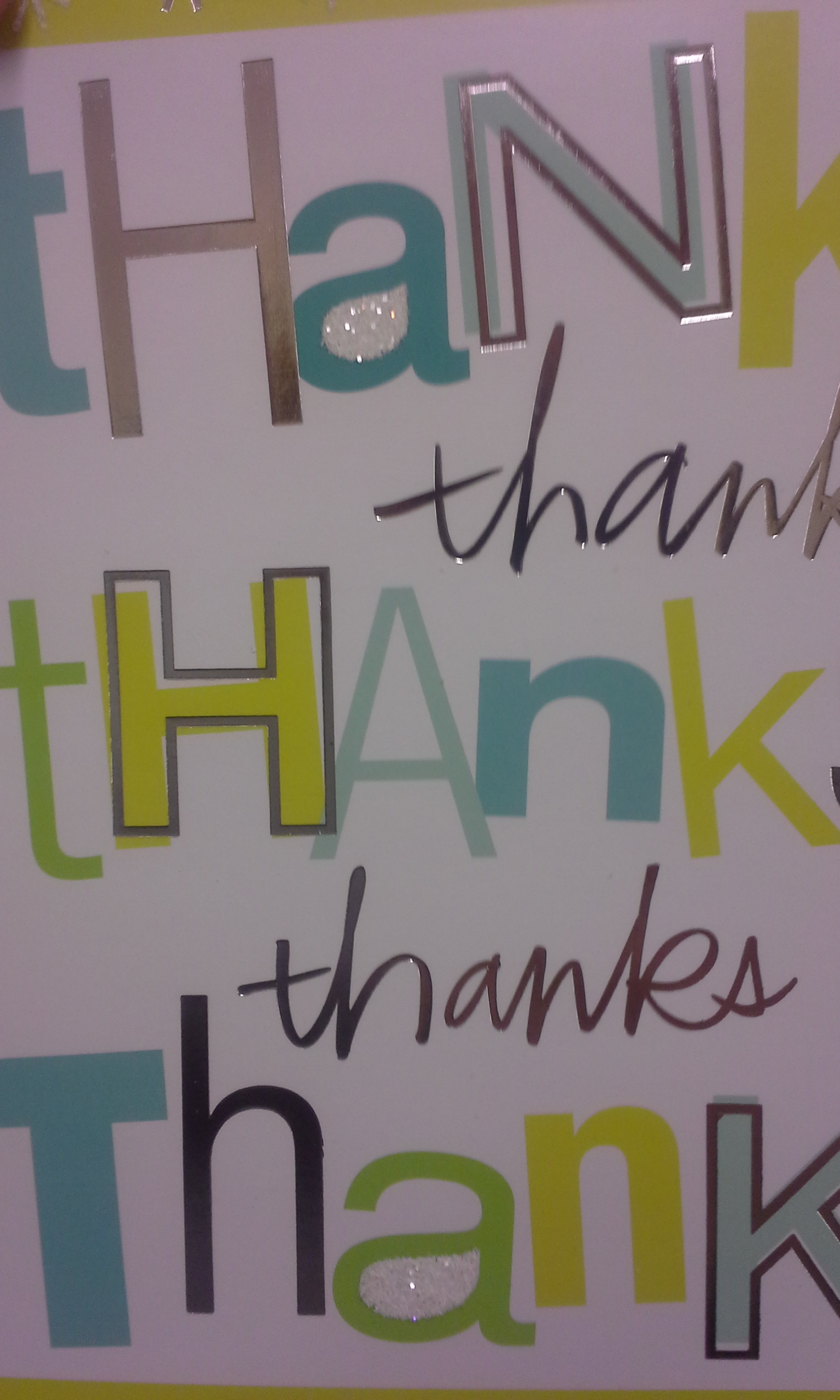
20140621_144742A thank you note is equally valuable in the workplace. In the past year, I’ve met with a few individuals who have sought career advice. I was pleasantly surprised when each one followed up with a thank you note. One or two were by email, and the rest were by snail mail. It didn’t matter to me how they sent them.

The act of sending the notes all but ensures we’ll continue to have a professional connection. It’s a thoughtful acknowledgement of the time I willingly gave to them. It reinforces for me, the importance of continuing to do so.

Thank you notes also remain important after interviewing for a job. While a lack of a thank you won’t eliminate a candidate, receiving a thank you, definitely elevates a candidate in my mind because it indicates that the person has social graces.

After two weeks at a new job, I gave my boss a thank you card. I wanted to acknowledge the time she had spent with me helping to orient me to the environment, and also to thank her for the extras she had done to make my first two weeks welcoming.

I also send thank you cards throughout the year to colleagues. I don’t know anyone who doesn’t appreciate a note thanking him for his hard work and dedication. The note doesn’t need to be long, but it should be sincere and specific. When I left my last job, I wrote a note to each of my teammates. I thanked each one for his or her contributions and for making it fun to be on the team.

A thank you note doesn’t take long, but it lasts a long time.