Reading to Learn about New Media

Who says books are going the way of the dinosaur? Sure, there are Kindles and Readers, but when you’re working at your computer trying to figure out Facebook, SEO or just what the next big communications trend will be, a book is a helpful and welcome tool.

Since I’ve been writing about social media frequently since starting this blog, I wanted to share five books that you might find of interest.

1) “Tribes: We Need You to Lead Us” by Seth Godin makes clear that the Web has eliminated the boundaries that often prevent tribes from forming.  Now that any group can become a tribe, who is going to lead them?
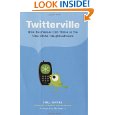
2) Twitterville: How Business Can thrive in the New Global Neighborhoods by Shel Israel shares revealing stories of Twitterville residents. On Twitter, which is dominated by professionals, word spreads quickly.

3) “Now Is Gone: A Primer on New Media for Executives & Entrepreneurs” by Geoff Livingston with Brian Solis started as a way for Geoff to share the epiphanies he had with regards to the changing communications landscape. I met Geoff about six months ago and then worked with him on a Twitter campaign.

4) “The New Community Rules: Marketing on the Social Web” by Tamar Weinberg will help you understand how social web technologies work, and learn the most practical and effective ways to reach people who frequent these sites.

5) “The Truth about Search Engine Optimization” by Rebecca Lieb is the book for you if you don’t know what SEO stands for. This book isn’t going to give you the technical know-how you’ll need but it is easily digestible and gives you and idea of what you need to do with respect to SEO.

How to Make Headlines

Like all PR practitioners, I’m working hard to get press for my organization. Unfortunately, what worked only a few years ago, doesn’t work as well today.

Recently one of my staff attended a meeting in D.C. about what editors/producers and reporters want from non-governmental organizations. Many of their answers probably will ring true for your organization as well.

As an international organization, we’re more likely to get our story out when a disaster strikes. It’s sad, but true. It’s when the media and the public are paying attention.

Taking this a step further, it means finding the trends in news. Afghanistan is hot right now. Does your company have any connection? Do you make a product that is used by the military? Now is the time to push that story.

We all know that there are fewer and fewer reporters. Those that remain are overworked and underpaid. So when you e-mail them, be succinct. For many, the only thing they read is the subject line of the e-mail. To get the e-mail read, you’re going to have to write a short sales pitch in that subject line to catch the reporter’s attention. Then add a few details in the body of the e-mail and your contact information.

A successful media hit may not be the printed newspaper. It may be the mainstream media’s digital side, whether it’s the Web site or their blog. My organization had a hit with the LA Times art blog, and we were delighted. Of course, we’d all still like to see the story in print, but it’s time to shift our focus.

How have you been successful in getting press coverage?

Editor & Publisher — Rest in Peace

 What does it say when the publication that covers the newspaper industry folds?

Last week Nielsen Business Media announced that it would cease operations for Editor & Publisher. The move surprised the staff, especially because there will not even be an online presence.

As a college student, I subscribed to E&P so I would know where the jobs were and would know what trends to talk about when I went for my interviews. I continued to read it because it offered insight into the world of newspapers. The writers never glossed over problems within the industry. The unvarnished truth was put forward for all to see.

I shared the publication with students when I taught media ethics. I read it when I wanted to see how others covered a particular topic. It’s coverage allowed me to quickly read to understand the state of newspapers.

I guess I don’t have to read anymore to understand the state.

To read more, click here http://www.poynter.org/column.asp?id=45&aid=174719

Ethics in a Social Media World

Social media is no different from any other communications tool. Integrity and ethics are critical. If anything, the two are more important in social media because of the engagement, or conversation.

Information flows quickly, and to succeed one must engage and converse. That means allowing comments to be seen. It means that your own social media efforts should have a name and photo attached.

When you do this you will build your brand — either your personal brand or that of your organization — and you will find followers, customers or clients.

When you don’t, you’ll find a fast backlash.

The conundrum for everyone is that the social media landscape changes — sometimes daily — and keeping up is a challenge.

If you are transparent and authentic in your endeavors, though, your ethics won’t be compromised.

Twitter, Twitter, Twitter

Twitter is the number one word for 2009. It outranked Obama and H1N1. Not surprising given that currently there are 6 million Twitter users. By 2010 that number is expected to grow to 18 million!

What, you’re not using Twitter? You don’t get it?

Don’t panic. It’s still not for everyone, but if you really don’t get it and at least want o understand it then pick up a reference book to learn about it. Better yet, create an account. You don’t have to send a tweet every day (a tweet is what your post is called). You could do it once a week. You could simply follow others.

If you still aren’t comfortable or have no idea where to even start, then go to www.lynda.com and sign up for the Twitter essentials. Cost is $25 for a month. You can take as many modules as you like — the best part is that you can do it from your home computer at any hour. It’s the best investment you’ll make in 2009.

I recently heard from someone who did just that. She confesses she’s now tweeting for several of her clients.

Even if you don’t start tweeting, you won’t be behind the curve and you’ll be ready for the number one word of 2010.