Video 101

Peter Soby of Soby Vision is a storyteller.

Only his tools are not pen and paper but rather a Canon XF300. He shoots videos.
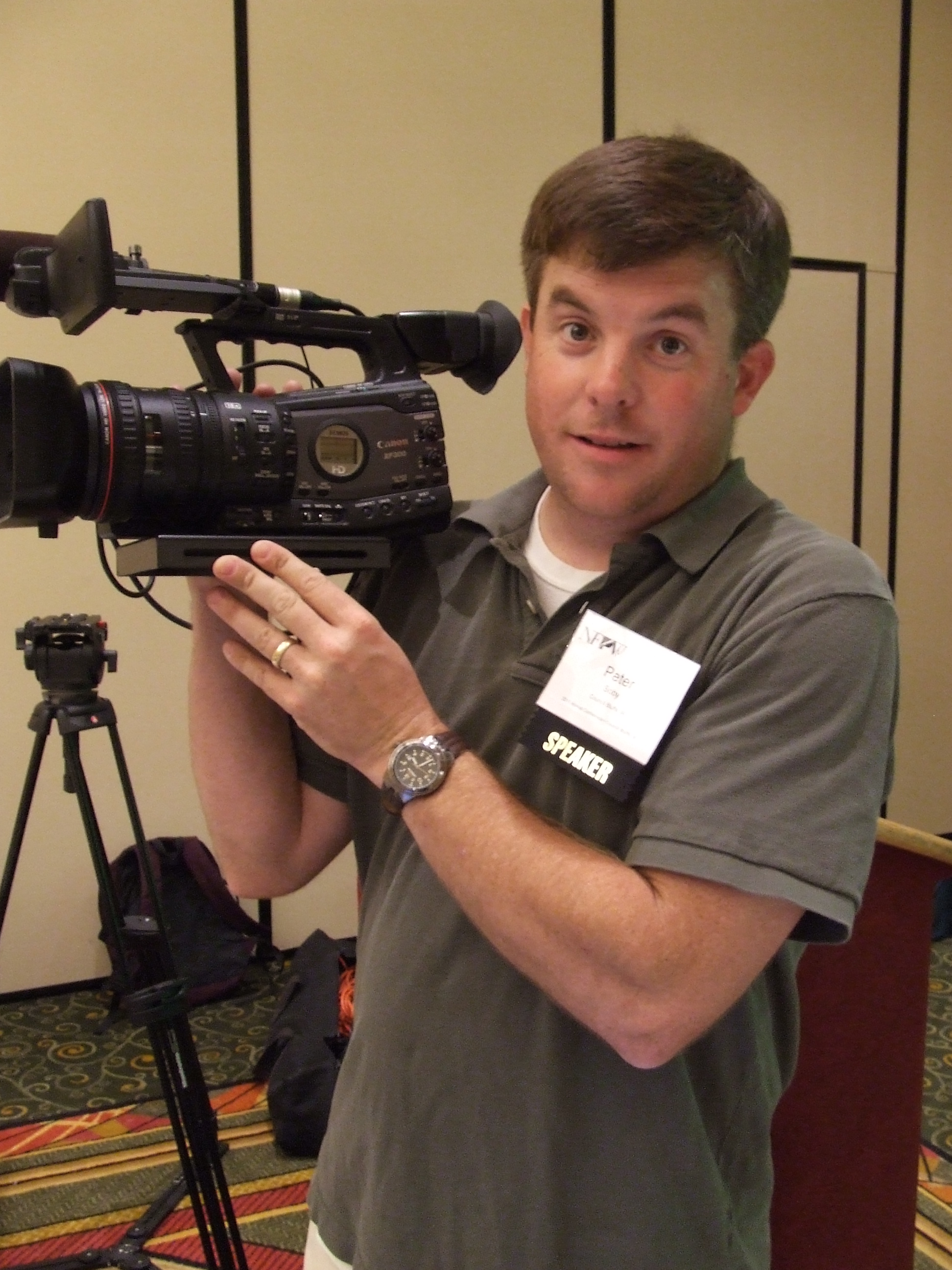
Peter Soby

Peter Soby explains how to shoot good video. (Photo by Cynthia Price)

And because we’re such a visual society now, Soby says learning how to shoot basic video is critical for those in the communications field. “YouTube has made video that is a little rough okay,” he added.

He offered several tips for shooting good video during a NFPW seminar:

1) Make yourself a tripod – lean up against something.

2) Be loose. If you’re too tight your muscles will shake.

3) Know how all your stuff works. Be able to set up quickly. Practice. He said he practices with a giant stuffed animal in a business shirt. He comes into the room and quickly sets up his equipment and begins shooting video. Once he could do it quickly, he knew he could do it in situations where the subject only had a short time for the interview.

4) Shoot sequence shots. “You shoot this way because our eyes are looking all over,” Soby said. “This will immediately make the video look better.” He noted that most people new to video shoot a lot of medium shots. Instead, shoot wide (to capture the entire scene), medium and tight (close up on the subject or on the action).

5) Use an external microphone because it will make the sound better.

After you shoot the video, what next? He recommends becoming familiar with the video editing software that comes with your computer, such as Windows Moviemaker or iMovie. For even better quality, you may want to buy a professional editing package.

Mystery Novelist Shares What She Loves

Alex Kava, who has written 11 novels, including nine in the critically acclaimed Maggie O’Dell series, grew up in the small town of Silver Creek, Neb. As an aspiring writer she was always told to write about what she knows.

As she told an audience at the 2011 NFPW conference that didn’t work for her. “I write about murder,” she said as the audience laughed. “I can assure you, I am not writing about what I know.”

She shared some of what she has learned.

Cover of Alex Kava's book, HotwirePersistence is just as important as talent. Alex said she received 116 rejections from literary agents. Her first novel still sits in the bottom of a drawer, although she is thinking about turning it into an e-book. Today her novels are published in 24 countries.

When you bump your head against the glass ceiling, you look for any crack you can find and you improvise. Alex, whose real name is Sharon, said when she submitted her novel agents would tell her to tone it down, that it was too violent and that she should add some romance. “They were really telling me they had no idea how to sell something that wasn’t romantic suspense,” she said.

Recognizing that her name was an obstacle, she changed it to one that could be misconstrued. She wasn’t mad that she had to do it  because she figured if agents couldn’t tell if a man or a woman had written the book, it was a compliment to her writing.

The same holds true for her character Maggie O’Dell. The character, Alex said, can’t have as many one night stands as a male protagonist. And she can’t cry, drink excessively or swear.

Truth is stranger than fiction. “If my readers can’t tell what’s fact and what’s fiction, then I’ve done my job,” Alex said. If she doesn’t know something, she researches it, and as she noted, “I learned all kinds of information that you can’t use at cocktail parties.” She knows the difference between a floater (body in the water) and a flyer (someone who is pushed or jumps to their death). She knows how a taser works. And she knows when a body starts to decompose.

If you are going to be a writer, you have to have very thick skin. “Your success will depend more on how you respond to what they say then on what they say,” the author said.

Eleven novels into her career, Alex Kava doesn’t write what she knows, but rather what she loves.

SNAP! Era Closes

What an evening!

NFPW just finished celebrating its 2011 communications contest winners and swearing in a new board. Congratulations to Lori, Teri, Marsha, Ellen and Marianne! This also means my two-year term as president has drawn to a close.

It’s been an incredible two years.  My campaign was SNAP! I chose to focus on Sustainability, Networking And Professional development. The term ended with NFPW solidly in the black with respect to finances. We’ve identified conference locations for the next few years. We’ve sustained membership (and now it’s time to grow it). A leadership manual was created. A blog started. Posts to Facebook and LinkedIn were used to connect us between conferences. Agenda was chock full of member profiles and career advice. And we’re pursuing an online communications contest.

To do all of that required a time commitment on the part of each board member. Thank you for your commitment and service.

For me, it was a time to stretch and lead. To drive new initiatives and to shake-up the status quo. It was exhilarating, rewarding and, yes, at times, exhausting. So why do it? For years NFPW has provided me with networking and professional development opportunities. At conferences, I discovered others had the same issues and concerns I had, and we’d brainstorm solutions. Others
shared their successes and I learned from them. Throughout the years, members (really, they are friends) have encouraged me, commiserated with me and laughed with me. NFPW had given me so much; it was time for me to give back.

I sought out new members for my board. I knew that if they, too, could be involved with NFPW, they would develop an even stronger bond to the organization.

During my tenure I strived to share management and coaching ideas with the board. We all shared and grew. The most rewarding comment came from Linda Koehler, our Agenda editor. I knew I was asking her to stretch, and
I promised to sprinkle fairy dust to help her along the way.

Here’s what she told me: “I am grateful to you for so many things: like giving me the opportunity to grow, professionally and personally; to step outside my box; to have the opportunity to visit new places; and to meet some extremely wonderful people….

“So, thank you, Fairy Godmother, for the confidence you showed in me, where I saw none. This Cinderella enjoyed the ball.”

I enjoyed the ball, too. Thank you for inviting me.

Snapshots from 2011 NFPW Conference

The 2011 NFPW Conference is in full swing. Yesterday (Friday) was a busy day. We heard from not one, but two mayors. We learned about PolitiFact, heard from an expert on Afghanist and learned the basics of social media and getting our book published. We celebrated with beautiful music by the Hedgehog Fund and celebrated our COA, Beth Miller of Delaware Press Association.

Here are a few snapshots from the day:

Mayors of Council Bluffs, OmahaThe Honorable Jim Suttle, Mayor of Omaho, and the Honorable Tom Hanafan, Mayor of Council Bluffs welcomed NFPW members to the 2011 conference. The two towns are separated by the Missouri River.

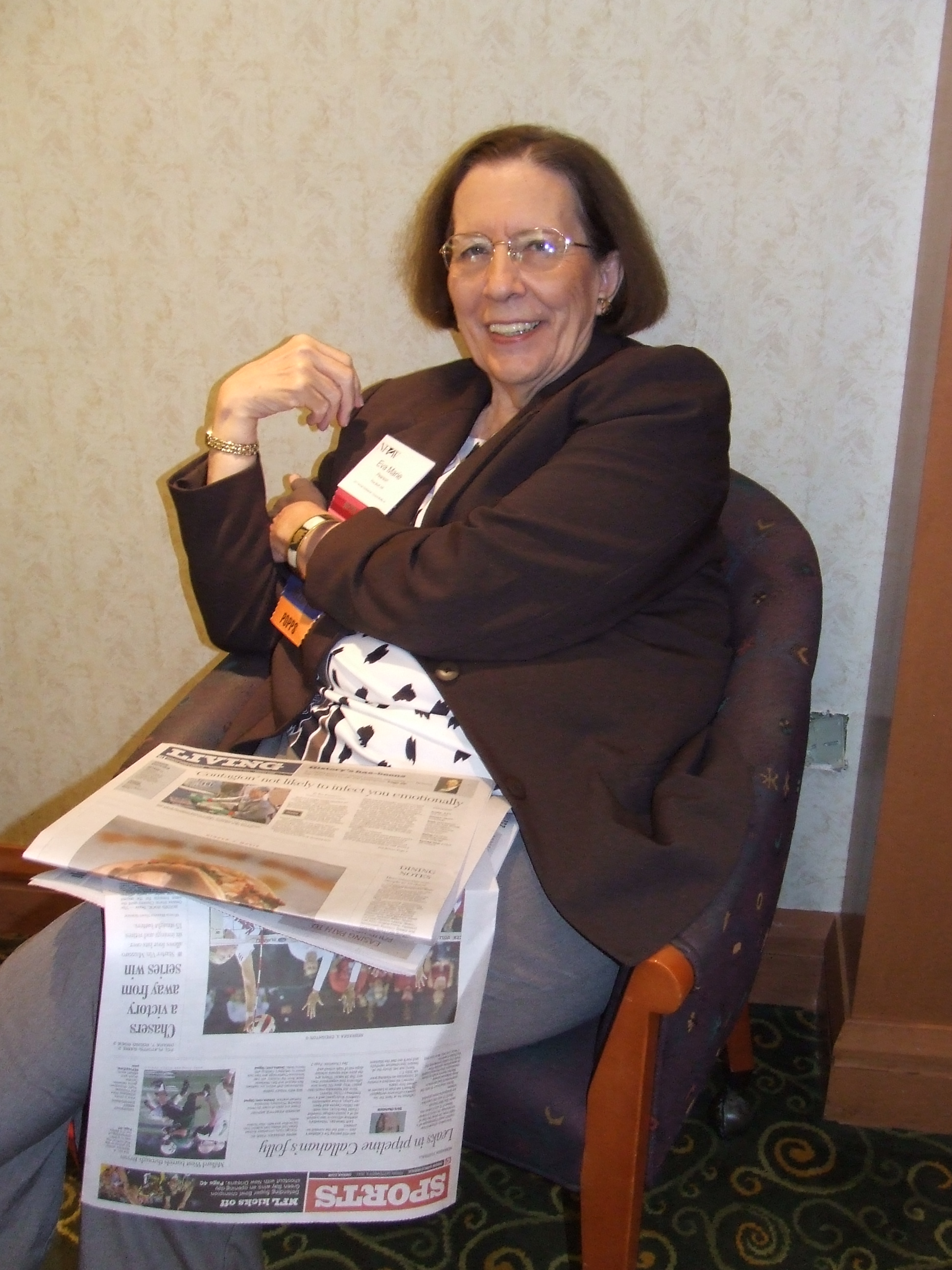
No matter where NFPW members travel, they want to know the news. At this year’s conference, weahter has been a hot topic. Eva Marie Pearson of Arkansas, took a break from the seminars to catch up on the day’s news. Reading the newspaper

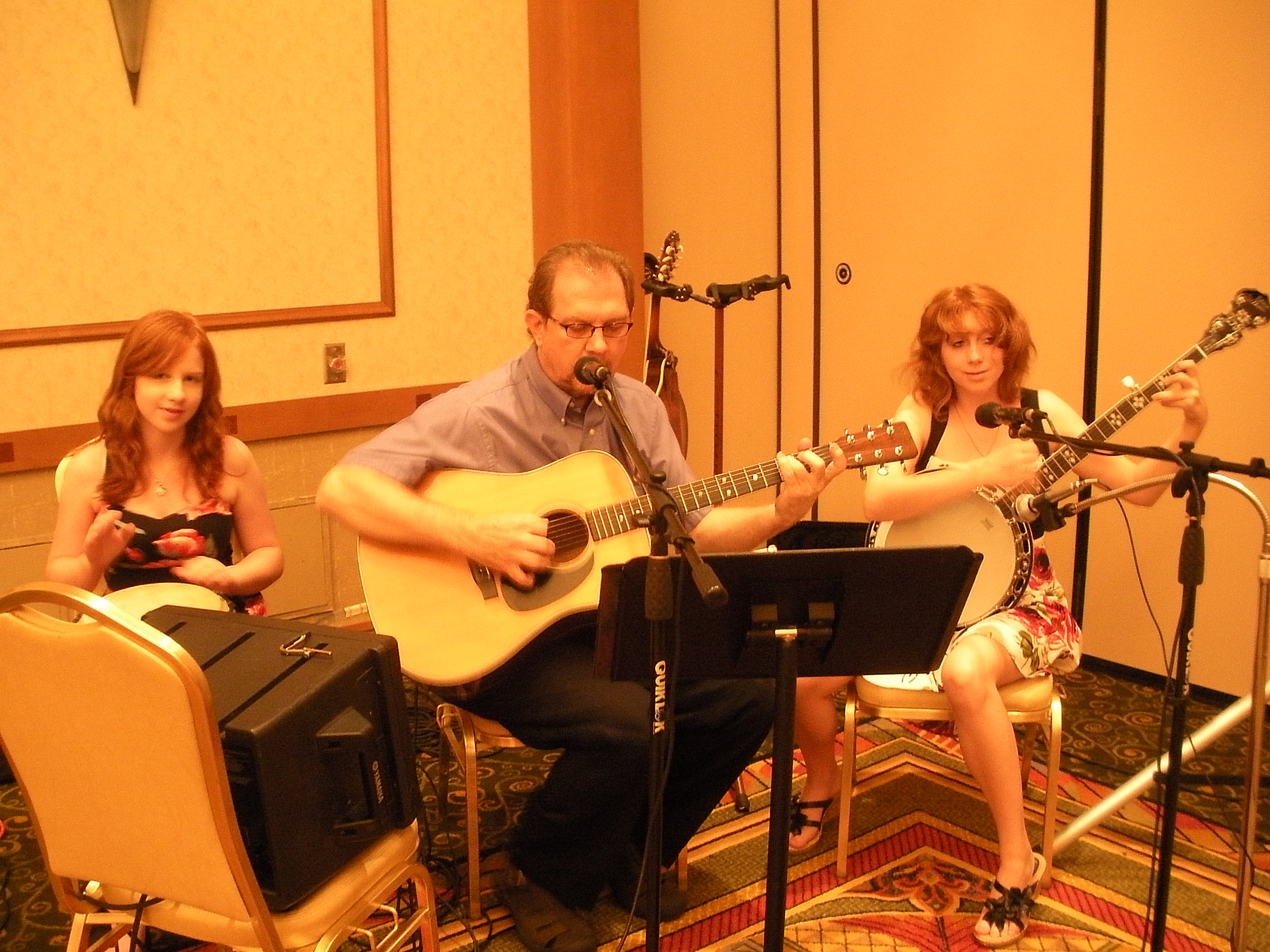
The Hedgehog FundThe Hedgehog Fund provided musical entertainment Friday before our COA banquet. The Hedgehog Fund is comprised of the husband and daughters of Nebraska Press Women member Stephanie Geery-Zink. They feature cover songs in the acoustic American genre.

Beth Miller is the 2011 COA.Beth Miller of Delaware Press Association was named  COA for 2011. She is a rporter for The News Journal Co., which publishes Delaware’s only statewide daily newspaper. Her work has included assignments to Yugoslavia, Afghanistan, Haiti and the Gulf Coast after Hurricane Katrina. She is a past president of the Delaware Press Association.

NFPW Code of Ethics

During the opening meeting of the 2011 NFPW conference, the Council Bluffs Suffrage Society marched on the meeting to gain support for the women’s right to vote and own property.

Council Bluffs Suffrage Society march on the NFPW general membership meeting.

Although audience members were surprised by the interruption, the presentation reminded members of the rights that women had to fight for and why NFPW came to exist.

The interruption came only moments after members recited the NFPW Code of Ethics, which reaffirms freedom of the press and our responsibilities as communicators.

The NFPW Code of Ethics:

“As a professional communicator, I recognize my responsibility to the public which has placed its trust and confidence in my work, and will endeavor to do nothing to abuse this obligation.

With truth as my ultimate goal, I will adhere to the highest standards of professional communication, never consciously misleading reader, viewer, or listener; and will avoid any compromise of my objectivity or fairness.

Because I believe that professional communicators must be obligated only to the people’s  right to know, I affirm that freedom of the press is to be guarded as an inalienable right of the citizens of a free society.

I pledge to use this freedom wisely and to uphold the right of communicators to express unpopular opinions as well as the right to agree with the majority.”