Are You Standing Still, Or Are You Growing?

What have you done outside of work to make yourself better over the last two or three years?

That’s a question that Seth Besmertnik asks of interview candidates. Besmertnik, who was being interviewed by Adam Bryant for his New York Times column, “Corner Office,” said, “How people spend the time when they’re not working and when they’re not sleeping is the biggest indication in my mind of what they want in life.”

It’s a question I ask myself frequently. One thing that has helped me for the past two decades is my involvement with the National Federation of Press Women. Through that organization, I’ve developed my event planning skills, my networking skills and my leadership skills. The next conference is in Utah, and if you are a communicator, it’s a great time to get involved. If you already are a member and have not been to a conference, why not make this the year you do something to help your career? As a first-timer, you can apply for a grant to have the registration fee covered.

You can also learn new skills by taking online courses. One of my favorite places to learn is Lynda.com, which allows you to participate in tutorials on thousands of software subjects for a small fee. A one-month membership is $25 or you can sign up for several months or a year and access close to 1,000 courses 24/7. I’ve found the courses helpful for improving my skills in PowerPoint and Excel and for learning the basics of new technology.

Another way to improve your skills is to volunteer. One of my colleagues is a graphic artist and she volunteers those skills to help an animal rescue organization. I’ve been learning more about the world of publishing by volunteering at my local library to coordinate a writers’ series.

You could also pick up a book. I try to read four to six books related to my profession each year. I’m doing better now that I participate in a book club at work that is focused on leadership. Once a quarter we read a book and discuss it. We just read The Leadership Challenge by Kouzes and Posner.

The adage “If you aren’t changing, you’re standing still” is more true than ever. I ask again, what have you done outside of work to make yourself better?
Questions to Ask at a Job Interview

When I went to my first interview, I only had one question: When do I start?

As I’ve continued my career, when the employer asks me if I have any questions, I take advantage and ask questions to determine if I’ll be a good fit with the organization.

I don’t ask questions about benefits. For one thing, I don’t want it to seem that is all that interests me. For another reason, it’s almost always best to talk with someone in the HR department about benefits.

That doesn’t mean I don’t have questions. They fall within a few key areas.

Professional Growth. What is the employee review process? How is progress measured? Do you support involvement in professional organizations?

Supervision. How many employees report to me? What are their backgrounds? How long have they worked for the company?

Culture. Is telecommuting an option? What is the average length of tenure? What equipment is available to me and what support? Will I be expected to be available after hours?

Travel. Will the job require travel? Will I have a company credit card? What are the travel policies?

First Day. If possible, find out in advance your email address and phone number so you can share it with your contacts before you leave your current job. I usually ask this once I’ve accepted the offer and necessary paperwork is signed.

Answers to these questions will provide a better understanding of the environment and whether you would be a good fit.

How Do You Measure PR Success?

In my career, I follow the adage, “If you can’t measure it, you can’t manage it.”

Early on in planning a PR campaign, I meet with my team and we define what success will look like. A successful campaign does not mean that we wrote and distributed a press release. The press release is my channel. However, if the press release is picked up and leads to three story placements, and my goal was four story placements, I’ve achieved a 75 percent success rate. I may need to make follow-up calls with other media outlets if I want to reach 100 percent of the goal.

A good PR campaign has four components:

  1. Goals: What do you want to achieve?
  2. Audience: Who do you need to reach?
  3. Strategy: What are the best ways to reach them?
  4. Channels or Tactics: How will you deliver?

If you begin with the goal or end result in mind, you are much more likely to succeed.


Teens Find Their Voice

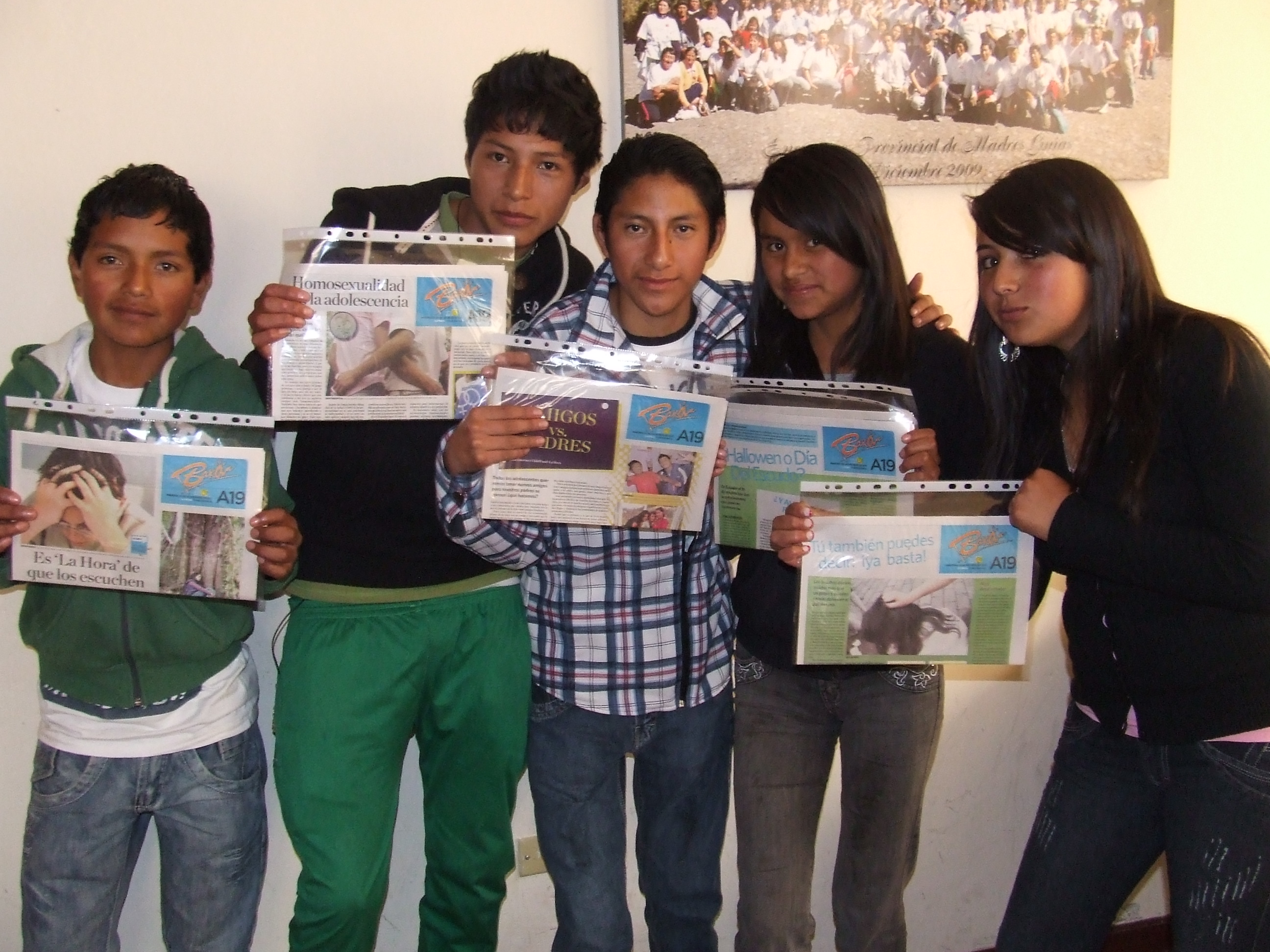
Like many journalists today my career started in high school writing for the school newspaper. I recalled working on the newspaper when, on a trip to Ecuador, I met with a group of teens, who wrote for the community newspaper about topics that were important to them such as teen pregnancy, bullying, tattoos and finding work.

Turns out teen issues are similar with some variations around the world. On this visit, I was in the city of Ambato, the capital of the province of Tungurahua, which is Ecuador’s third-largest city.

Teens showing their newspapers.

Teens find their voices in writing for their community newspaper.

At first the teens were hesitant to talk with us. We were a large group, and most of us only spoke English. A translator was needed, too.

As we started asking questions about their writing, they became animated and shared how they chose their topics and conducted the research.

They proudly showed us copies of the newspapers where their articles appeared and talked about a 20-minute program at a radio station in town, where they discuss these topics.

As they shared their stories, their confidence became visible. And it was clear that writing for the newspaper and recording for the radio provided an outlet for their teen angst and ensured that their voices would be heard by parents and community members.

Benin, 16, says: “We start getting to know each other. We spend a lot of time rehearsing and then we interview people – that’s how we get to know what people think.”

“Our first challenge was to lose our fears,” said Pachacuti, 15. “We were afraid to even talk to our peers.”

Hernan, 15, said, “This has been a great experience. I am not afraid, and I like to hang out with my friends.”

Benin shared one more benefit: “It feels cools to see your name in the paper.”

Yep, those are some of the reasons I enjoyed working on my school newspaper.

Video Stories Share Powerful Messages

Almost everyone today has the ability to tell a story visually. Smartphones come with built-in video as do most digital cameras. And if you want to get a bit more techie, you can purchase a flip-cam or digital video recorder for not much money but with great features.

Audiences today expect to view their stories. YouTube statistics bear this out.

  • More than 800 million unique users visit YouTube each month.
  • More than 4 billion hours of video are watched each month on YouTube.
  • 72 hours of video are uploaded to YouTube every minute.

Cisco predicts that 60 percent of the Web’s data will be video within four years.

Videos can be used to create awareness. They can be used to say thank you. They can be used to ask for money.

Before you create your video there are 3 things to consider

  1. Clear message: What is the main point you want to share with your audience, which leads to point 2.
  2. Audience: Aiming for the general public is not what you want to do. You need to identify a specific audience or demographic.
  3. Call to action: What do you want the person to do? It can be as simple as sharing the video with their friends to raise further awareness of the topic. Or it could be asking for a financial donation.

What story will you tell visually?