ChicagoNow Part of Evolving Media Landscape

Is finding a source through Facebook unethical?

Tracy Schmidt, editorial director of ChicagoNow, doesn’t think so. Previously she was a reporter for Time Magazine, reporting on Facebook. She also covered the Virginia Tech shootings. Through Facebook she found a student who had been in one of the classrooms, and she got her interview.

“Some of the other reporters thought I was unethical,” she said. “I see Facebook as a telephone directory.”

Today she is part of ChicagoNow, a network of more than 300 local blogs. She developed its concept and managed its launch in August 2009.

She joined the Tribune in 2008 as a reporter at Triblocal, a reverse-published, hyper-local newspaper group. “We take the best online content and fact check it and then we put it in a paper and include it in the Tribune,” she explained.

Chicago Now bloggers post more than 100 entries to the site each day about local topics, Tracy said. Then Chicagoans begin commenting. “The result is a lively, authentic conversation about all things Chicago,” according to the ChicagoNow website.

Tracy sees many similarities between bloggers and journalists. “They do some of the same work,” she said. “Journalists are amazing investigators. Bloggers supplement those by commenting on the stories.”

She noted that ChicagoNow does not censor its bloggers and doesn’t worry about problems with the blogs. “Other people are going to comment and correct them,” she said. “The community really self polices on ChicagoNow.”

RedEye Proves Young People Will Read Newspapers

Who says young people won’t read newspapers?

Tran Ha, associate managing editor for RedEye, Chicago’s free daily newspaper and website, says RedEye was launched eight years ago to appeal to Chicagoans in their ‘20s and ‘30s who weren’t reading the paper.

“The graphics were bold,” she noted, and copy, while brief, was informative. “We have a good array of copy,” she said during a keynote session of the 2010 NFPW Conference in Chicago.

The website says its mission is “to provide our target readers with a daily buffet of news, trends, pop culture, sports entertainment and social buzz – served with a side of sass when appropriate.”

It’s a tall order to fill especially when RedEye readers also are picking up other publications. “People approach their news habit as an ala carte sort of thing,” Ha said. Despite that, RedEye distributes 250,000 papers daily Monday through Friday along commuter lines and all over the city. A free weekend edition is available through home delivery.

The RedEye staff of 30 does a lot of everything. “Innovation is built into our DNA,” Ha said. “It’s about not being afraid to try new things and to fail sometimes.”

The formula appears to be working.

Reinvention of the Chicago Tribune

The time for hand wringing is over. The time for reinvention is now. Jane Hirt, managing editor of the Chicago Tribune, declared during a keynote session at the 2010 NFPW Conference.

Jane noted that the pace at the 163-year-old Tribune is breakneck because “technology will always change.”

Jane Hirt discusses the reinvention of the Tribune.

“We think of it as disruptive innovation,” she said.

To be innovative, the newspaper seized on what it did best, she said, which is watchdog reporting. “We resolved to make watchdog a daily defining category,” she said.

It’s a key part of planning the paper each day and such reporting is labeled clearly in the newspaper.  Topics range from toxic chemicals in the air, drinking water and deadly flaws in car seats to highly connected students who get into the University of Illinois despite poor grades to officials with pensions of $250,000 or more.

“We reset the news agenda every morning, “ Jane said.

In hindsight, Jane said the watchdog approach was a no-brainer because both reporters and readers love it and from a business perspective it makes the Tribune unique.

The paper also has gone to a hyperlocal coverage meaning a reporter is assigned to each town in 30 suburbs who reports on a breaking news basis online. The paper has been doing this for about a month. Reporters also are trained in search engine optimization and using Facebook and Twitter. They are up-to-date on Google trends and topics.

The Tribune also made a cultural shift, Jane said, when it began listening to its readers and users. “For many years newspapers didn’t do that,” she said.

Today’s media company, Jane said, “must have a responsive, diversified and profitable portfolio of print and digital.”

Law of Relativity Attracts Success

I have enough time each day to accomplish everything I need to address strategically. I have time for emails and I have time to meet with team members. I have time to read, and I have time for my friends.

Those of you who know me are probably wondering how I could type that sentence.

It’s simple. I’m applying the Law of Relativity, which is the thought that nothing in our life has meaning until we compare it to something else. I look at other individuals and they seem to get everything done so I naturally assume I don’t have enough time. I also see the piles on my desk.  

By Leo Reynolds

But instead of seeing piles I’m going to see opportunities.  I will start each day choosing to say, “There is enough time.”

This all stems from my work with a business coach, who is helping me grow as a leader. One of the issues I wrestle with is time management. I need to time to lead my team and provide them with what they need to succeed. But I have numerous assignments that require attention. How can I do it all?

I now think of time as a resource and not a trap. I have choices about how I spend my time.

Thinking of time as a resource is helpful. I start the day focused on the 2-3 items I most need to finish that day using my time wisely to do so. When those big projects are finished I fill in the small bits of time handling pesky email.

And when I start whining about my lack of time, I pivot my thinking to create a mind shift so that I think of time as a resource.

It’s all relative.

What will you do to give yourself the gift of time?

Face 2 Face in Chicago Elevates NFPW Networking

I’m still flying high and not because I was riding the elevated trains in Chicago last week. I’m talking about meeting “Face 2 Face” in the city for the 2010 NFPW Conference.

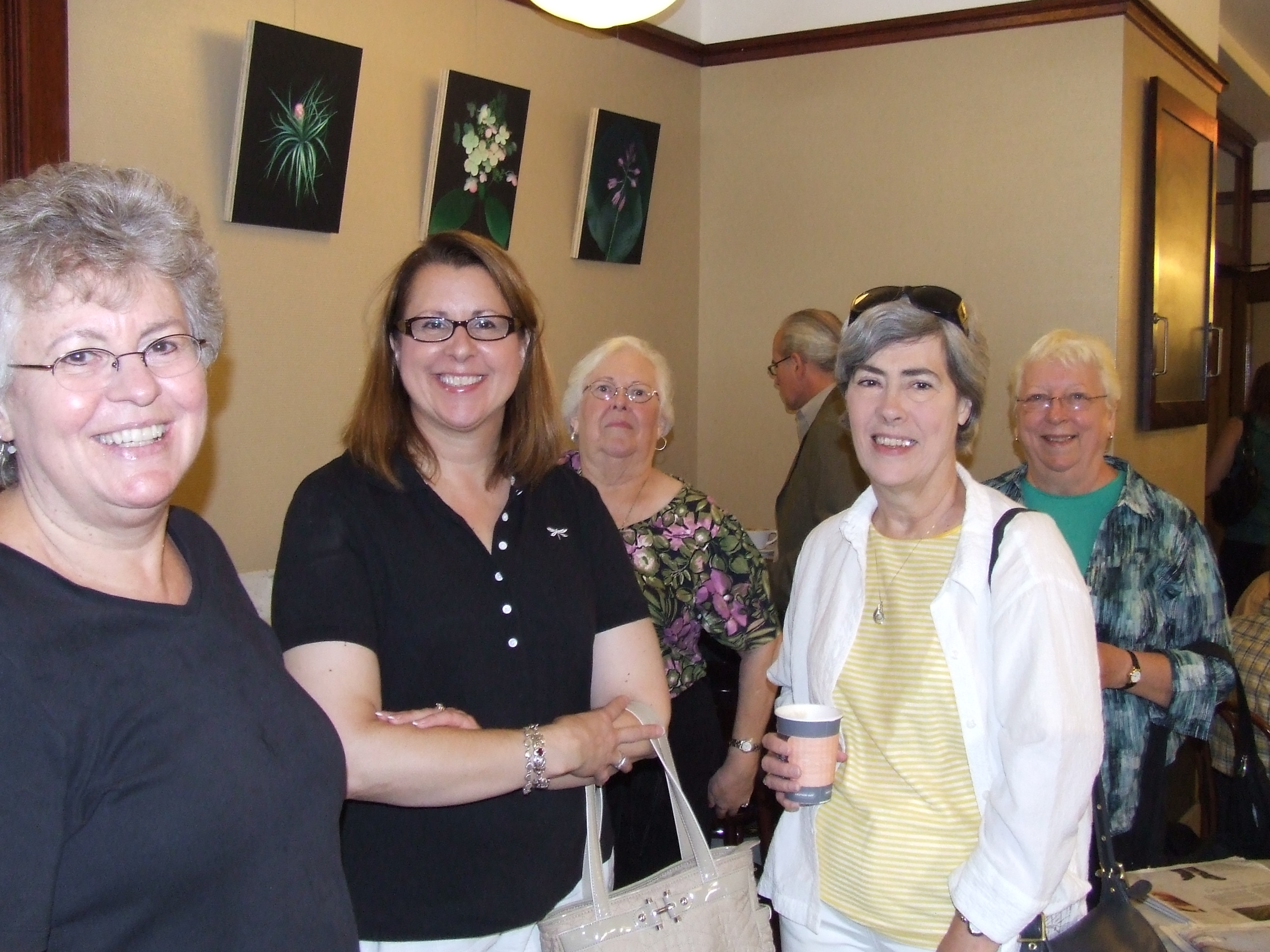
NFPW members meet Face 2 Face in Chicago.

What a time we had! I met so many people, including year-long Facebook friend, Alison Stein. Finally, we talked Face 2 Face.

I met Wilma Moore-Black, president of Kansas Professional Communicators. She may have lost the bid on the signed baseball, but she’s a ball of energy who is going to go places in NFPW. And I’ll be cheering her on!

Betty Packard of California kept the silent auction up and running so we could all keep bidding. The monies raised go to NFPW’s Education Fund.

Julie Slaymaker, who is president of Woman’s Press Club of Indiana, will never let me live down my temporary paralysis. But being the gracious lady that she is, I know she has forgiven me.

I traded business cards, blog links, photos and lots of ideas.

I heard first hand how the Chicago Tribune was reinventing itself. Managing Editor Jane Hirt said, “Innovation is built into our DNA.”

Even if innovation isn’t built into your DNA, the workshps provided plenty of innovative ideas and approaches from building one’s resume to writing a book in six weeks to cultivating a free and responsible student news media.

What was your favorite part of the NFPW conference?