Reading to Learn about New Media

Who says books are going the way of the dinosaur? Sure, there are Kindles and Readers, but when you’re working at your computer trying to figure out Facebook, SEO or just what the next big communications trend will be, a book is a helpful and welcome tool.

Since I’ve been writing about social media frequently since starting this blog, I wanted to share five books that you might find of interest.

1) “Tribes: We Need You to Lead Us” by Seth Godin makes clear that the Web has eliminated the boundaries that often prevent tribes from forming.  Now that any group can become a tribe, who is going to lead them?
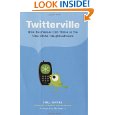
2) Twitterville: How Business Can thrive in the New Global Neighborhoods by Shel Israel shares revealing stories of Twitterville residents. On Twitter, which is dominated by professionals, word spreads quickly.

3) “Now Is Gone: A Primer on New Media for Executives & Entrepreneurs” by Geoff Livingston with Brian Solis started as a way for Geoff to share the epiphanies he had with regards to the changing communications landscape. I met Geoff about six months ago and then worked with him on a Twitter campaign.

4) “The New Community Rules: Marketing on the Social Web” by Tamar Weinberg will help you understand how social web technologies work, and learn the most practical and effective ways to reach people who frequent these sites.

5) “The Truth about Search Engine Optimization” by Rebecca Lieb is the book for you if you don’t know what SEO stands for. This book isn’t going to give you the technical know-how you’ll need but it is easily digestible and gives you and idea of what you need to do with respect to SEO.

Ethics in a Social Media World

Social media is no different from any other communications tool. Integrity and ethics are critical. If anything, the two are more important in social media because of the engagement, or conversation.

Information flows quickly, and to succeed one must engage and converse. That means allowing comments to be seen. It means that your own social media efforts should have a name and photo attached.

When you do this you will build your brand — either your personal brand or that of your organization — and you will find followers, customers or clients.

When you don’t, you’ll find a fast backlash.

The conundrum for everyone is that the social media landscape changes — sometimes daily — and keeping up is a challenge.

If you are transparent and authentic in your endeavors, though, your ethics won’t be compromised.

Twitter, Twitter, Twitter

Twitter is the number one word for 2009. It outranked Obama and H1N1. Not surprising given that currently there are 6 million Twitter users. By 2010 that number is expected to grow to 18 million!

What, you’re not using Twitter? You don’t get it?

Don’t panic. It’s still not for everyone, but if you really don’t get it and at least want o understand it then pick up a reference book to learn about it. Better yet, create an account. You don’t have to send a tweet every day (a tweet is what your post is called). You could do it once a week. You could simply follow others.

If you still aren’t comfortable or have no idea where to even start, then go to www.lynda.com and sign up for the Twitter essentials. Cost is $25 for a month. You can take as many modules as you like — the best part is that you can do it from your home computer at any hour. It’s the best investment you’ll make in 2009.

I recently heard from someone who did just that. She confesses she’s now tweeting for several of her clients.

Even if you don’t start tweeting, you won’t be behind the curve and you’ll be ready for the number one word of 2010.

To Join Or Not To Join

In the past year I’ve become quite active on Facebook and LinkedIn. I have a blog, but I still don’t tweet. I’ve been part of conversations with NPFW members — young and old — about whether they should join and whether it’s a time waster.

At the least, any one in the communiations field needs to be familiar with the platforms. The only way to truly understand them is to participate, even if it’s only for a short time.

At the NFPW conference in San Antonio, Texas, blogger Nettie Hartsock described LinkedIn “as your corporate boardroom” and Facebook “as your playground.” It’s the distinction I’ve chosen to make, too. So if we networked professionally, please join me on LinkedIn. If you and I meet for dinner or talk on the phone in the evenings, please friend me.

The problem, though, is when co-workers ask you to be their friend on Facebook. It seems almost rude or antisocial to say no. Instead, I send a message and ask them to connect with me on LinkedIn.

When that didn’t work so well, I simply created a second Facebook account — this one for co-workers. I don’t post often to that one, but it does come in handy because I and my co-workers are able to share photos and videos. I work for ChildFund International, and employees travel frequently worldwide and capture video and photos of the children we serve. Facebook provides us with an easy-to-use platform to share what we’ve captured.

And ultimately, that’s the reason to join. If the platform offers you a benefit then join. If it doesn’t and is only hindering or aggravating you, then it’s okay not to join. There is another platform just waiting around the corner, and it may be exactly what you were looking for.

The Power of 3

Did you know that in 30 minutes you can address all of your social media commitments?

That was the message during one of the workshops at the 2009 NFPW Conference in San Antonio, Texas. The idea is that in those 30 minutes, you can write and post a blog, tweet, and update your LinkedIn profile.

It works. I’ve been doing it since the NFPW conference. Tonight was one of those nights that I fell behind so I was worried about getting a post up by my self-imposed deadline. In my 30 minutes, though, I did everything I needed to do.

Another session from the same workshop by Nettie Hartsock and Jennifer Hill Robenalt was to review your blog and blog roll every month. A blog roll should contain no more than 10-15 blogs, they said. So after three months check that the roll hasn’t grown out of control.

As for how often to post, yep, their recommendation was three times per week. I decided since I had a full-time job that almost always exceeds an eight-hour day that I would commit to twice a week, not three times. When I start posting three times a week, you’ll know I have the job well managed.

Suggestions for developing blog content included asking seven questions (or just three) of someone and posting the answers as an interview. Lists are always good especially when you include three tips or five hints.

So in just 30 minutes I’ve completed my blog, updated my LinkedIn profile and answered some emails. I still don’t tweet. And I’ll probably go over 30 minutes because I’ll go to Facebook, but I promise I’ll only play Bejeweled for 30 minutes!