Citizen Journalism Hopes to Impact BP Crisis

Geoff Livingston, a professional communicator, author and co-founder of Zoetica, is taking citizen journalism to the Gulf today. He and others want to find ways to help the fishermen impacted by the BP oil spill.

Says Geoff, “We will use all of our blog tools and social media capabilities to tell the stories of the people we meet and share them with our online community.”

(photo from Geoff Livingston's blog)

“It will be the personal story of how the spill is impacting people,” Geoff said Friday. “The story is so big it’s daunting. We want to bring it down to a personal level.”

Working with Citizen Effect, a nonprofit in Washington, D.C., Geoff and others will be in the Gulf this week to talk with those impacted and with those who are able to affect change.

In addition to the social media platforms, Geoff says, he already has several commitments for wider distribution. “We anticipate it being reported a little bit,” he says.

“I want people to feel like they can do something,” says Geoff. “We have to help each other. We want to find a way to help out the fishermen.”

One way to do that is to tell their personal stories.

Rubel Describes the Future of Social Media

We’re snacking on content all day as a result of social media, says Steve Rubel, senior vice president and director of insights for Edelman Digital.

He made his comments as part of the recent online Social Media Summit. Did you know that Americans visit on average 111 domains each month? Or that we view 2,500 Web pages each month?

So what does the future hold? He says that we will have digital embassies and that we must equip employees to become ambassadors. It’s critical that each of us embraces multiplicity and diversity. And, simply, use the force, don’t fight it.

Rubel sees three trends:

1)      Streams that will be fast and furious

2)      Digitally visible

3)      Insights and data

Being digitally visible will include paid search, owned search SEO, earned search and social search. YouTube is the #2 searched site behind Google.

Rubel expects that “we’ll tap into free tools and become data junkies.”

The trends aren’t that different from traditional communications. We all had to adapt to electronic communications. We have to ensure that our company or product is visible in a 24/7 environment. And we have to monitor, measure and analyze our efforts.

What trends are you seeing?

Don’t Fear Twitter

Okay, I’m going to do it. I’m going to start tweeting. Do you tweet? Are you thinking about it? If you’re a newbie, don’t fear Twitter. That’s some of the advice I heard as part of a panel presented by Social Media Summit.

Who to Follow…

Brian Clark (@copyblogger) suggests following people “relevant to what you are about and what your business is about.” He also suggests sharing more than just the content you have on your blog. “Sharing is a sign of status on the web,” he says.

Chris Brogan (@ChrisBrogan) suggests listening for a bit before deciding who to follow. And he strongly recommends against sucking up to the big names, such as Ashton Kutcher. It’s not going to get you more followers.

Keeping up with Tweets…

Chris says you don’t have to read every tweet. (Halleluiah!) Even if you tried, he says there is no way to keep up with all the tweets.

He recommends using tools, such as TweetDeck, which is a personal real-time browser. You can also use Twellow, a directory of public Twitter accounts. And don’t forget TwitterSearch. 

Connecting…

Twitter is more than simply sending out 140 characters. Chris says it’s about building relationships and connecting. That’s why the @ replies are so important.

Says Darren Rouse (@Problogger), “Twitter is a relationship building tool.”

Are you ready to connect?

Engage, Converse, Build Loyalty

Frequently I am asked how I find time to “do” social media. My answer is simple, “How do you find time to answer the telephone?”

For me, social media is a part of communications. Personally I use it to write this blog and share ideas and thoughts with NFPW members, peers and colleagues.  It’s a platform by which I can engage with many across miles while we converse (I hope). Over time, I hope to build some loyalty to this blog and to NFPW. I use it for the same reasons at work.

If you aren’t working on engaging, conversing and building loyalty, no matter what platform you use, you are going to have a difficult time communicating, growing your customer base or sharing ideas.

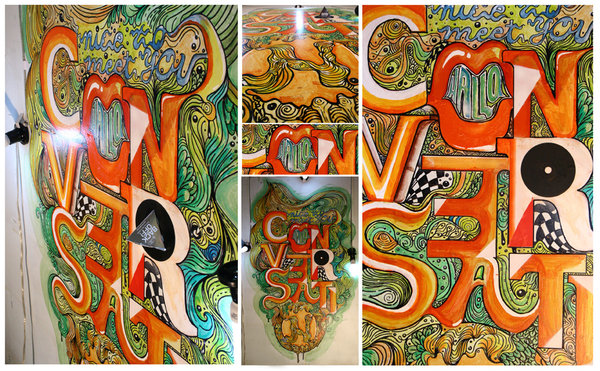
Conversation by nadydesign

Social media is about the art of conversation. It’s about relationships. You need to ask questions, engage and share information through links. Most importantly, it’s about trust.

As with any communications tool, you need to have the necessary resources. Obviously I need a computer and Internet. But I also need access to images. More importantly, I need time. I build my social media time into my day — or should I say evening?

I’ve created a schedule of posts and ideas. It’s not easy committing to twice weekly posts but it’s my self-imposed goal, and after doing this for more than six months now, I’m beginning to develop a small following. Thanks to each of you for tuning in; more importantly, thank you for sharing your suggestions, which I try to incorporate into future posts.

Reading other posts and commenting also is important. It’s not all about me. It’s about engaging. I learn so much from others. I presented on this topic last month at the Richmond PRSA meeting. This week Jon Newman, a colleague, is tackling the subject from a different angle, and I’ll be attending the session because I know I will get a fresh perspective.

Metrics are important, too. For me, it’s not about the number of followers. I’m interested in the number of comments I receive – either online, via email or face to face. After all, I want to engage and converse with my fellow NFPW members and colleagues.

Social Media Much Like a Triathalon

Jonah Holland won a Shorty Award, which honors the best people and organizations on Twitter. She won for her work with Lewis Ginter Botanical Gardens in Richmond.

She’s passionate about gardening, but she’s also passionate about triathalons, which is initially how she became active in social media.

“I think people are best at social media when it’s completely based on their own passion,” she said during an interview at a coffee shop. “That’s how I came at it.”

She started blogging about triathalons and then expanded, including her gig with Lewis Ginter.

She first learned of the Shorty Awards last year, and this year she thought “it seemed like something that could be in reach.”

Voting for the awards is public by the Twitter community, and Jonah noted that the Richmond community was key in her and Lewis Ginter’s win.

Jonah likens social media to a triathalon. “You set a goal and you don’t know if you can attain it but you’re going to see it through,” she said.

For those new to social media, she recommends not starting with Twitter, but rather with a blog. “Twitter is just microblogging,” she said. “Blogging gets you in the right mind set to tweet. At first it can be confusing and nonsensical.”

But after some time blogging and posting to Facebook, Twitter allows a person to complete the social media piece.

Whichever platform you choose to begin with, Johan says, “Start with you passion because without passion you really don’t have very much. You have to feel strongly to have a clear voice.”

At Lewis Ginter, Jonah’s blog posts often start out as emails to friends. She uses Twitter to help promote the blog and connect other people who would be interested in the blog – and the gardens.

She enjoys writing about Lewis Ginter because she finds that plants “are a connection to your past,” she said. “I find meaning in plants. They remind you of certain times and people in your life.”

Snapdragons, for example, remind her of her Nana Ruby.

As she continues to pave the way in social media, Jonah said she’ll incorporate more video. She also will continue to partner with people. “You have to find like minded people and band together,” she said. “It’s important to work together.”

Ultimately, Jonah said it’s about “adding value to the community and reinforcing the connections.