The Power of Self-Coaching

For the past year, I’ve been working with a coach. It’s been an incredible opportunity to strengthen my leadership and management skills. It’s also a lot of work. I tend to over think at the moment because I want to be sure I’m implementing what we’ve been discussing.
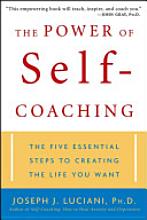
Along the way, I also read a book my coach recommended called “The Power of Self-Coaching” by Joseph J. Luciani. I was relieved when most of the quizzes indicated I wasn’t dysfunctional but that self coaching could enhance areas.

My biggest ah-ha moment came when I read this sentence, “A big part of why you struggle is because you’ve become attached to your problems.”

What?! Are you crazy? Do you think I like working long hours?  

Taking it a step further, the author wrote, “You can choose to create the life you want by training yourself to be a complete and successful person.”

I took it to heart. So for the month of December, I have consciously been doing a better job of prioritizing and completing the most important item (s) each day and when it’s time to go home if that item is finished, I go home. The other items can wait.  I’ve also set my alarm to go off later, thus preventing me from simply going in to work earlier.

I require deadlines when people ask me to do something for them. Without a deadline, I don’t make a commitment and I get bogged down. I also don’t hesitate to say no, especially when someone is trying to schedule another meeting on an otherwise already meeting packed day. If I’m in meetings all day, I don’t have time to do the work that I need to do or I don’t have time for strategic thinking and planning.

I also have scheduled more unscheduled time. Yep, I’ve had a few weekends of total spontaneity. It’s freed my thinking and has allowed me to feel more sane and relaxed. Who knew? The whole time I was trying to control everything, I was only making it worse.

Coaching isn’t for everyone because ultimately it’s the person being coached who has to do the work. And it is work – make no mistake. But the benefits I’m seeing are worth it. I know I’ll have to make some self-corrections as I continue to self-coach, but because I’m seeing the benefits, I’m going to keep doing the work.  

Are you ready for some coaching?

Why I Secretly Love Meetings

My day often is consumed by meetings. How about your day?

I decided a few months ago to take a hard look at the meetings to determine if they were necessary. I read an article that outlines the three functions of a meeting, which are —

  1. To inform and bring people up to speed.
  2. To seek input from people.
  3. To ask for approval.

I quickly realized that while our team meeting was needed to inform and bring people up to speed, we didn’t need to hold it weekly. Now we meet twice a month and all team members contribute to the agenda in advance. If there are no items that need to be discussed, the meeting is cancelled.

When others request that I attend a meeting I ask what the expected outcome of the meeting is. If they can’t tell me that, I decline the meeting. I’ve also learned to avoid back-to-back meetings. I build in 30 minutes after a meeting so that I can follow-up on the items that I need to. It’s helped me to stay focused and to advance projects. It also enables me to have time to think and reflect about what was discussed in the meeting.

Despite all this, I still attend a lot of meetings. Turns out I may secretly love meetings. According to Ron Ashkenas, managing partner of Shaffer Consulting, many managers secretly like meetings because they

  1. Encourage social interaction
  2. Keep everyone in the loop
  3. Often represent status

I’m not worried about status, but meetings do provide me with social interaction across divisions and keeps me in the loop. So as I continue to work to streamline meetings, I’ll accept the reality that I am a secret lover of meetings.

How do you feel about meetings?

Leadership Fable Focuses on Teams

What do you do when your team doesn’t debate an issue or when they don’t have any input? It’s something I have wrestled with, and thanks to reading “The Five Dysfunctions of a Team” by Patrick Lencioni have a better understanding of it.

In the book, which is told as a fable, a lack of trust is often at the core of a lack of debate during staff meetings or other interactions. One of the first suggestions to overcome this lack of trust was the notion of getting to know each other’s personal histories. This does not involve answering intrusive issues, but rather background questions that allow staff members to get to know something about each other and to begin to establish a level of trust.

The book also focused on setting goals for the team and developing a scorecard, or dashboard. This resonated with me because while my division has a dashboard, which I review with my vice president, I’ve not been consistent with discussing it with the team. The dashboard was created with team input, but for it to have real meaning, we need to review and analyze the results at least monthly.

According to “The Five Dysfunctions” my team will then be able to “make collective decisions on a daily basis.” This may result in some conflict as we determine the best way to get results. It’s critical for team members to be able to speak freely and openly with the intention of cycling through conflict and focusing on the team’s collective goals. It also means holding each other accountable “for what we sign up to do (and) for high standards of performance and behavior.”

Going back to the issues of trust, “trust is knowing that when a team member does push you, they’re doing it because they care about the team.” As a result of this book, I’m trusting my team to hold me accountable so that I can help the team avoid or overcome the dysfunctions.

Providing a New Hire with a Successful First Day

I’ve hired several staff in the past few months. I’ve also provided opportunities for interns. The first day is critical to setting the stage for their success.

Here are some of the ways I help to start them on their path to success:

1)      Clean out the office or cubicle they will use. I take the time to discard old files, wipe down the surfaces and put a fresh tablet, pen and Post-It notes on their desk.

2)      Send an email prior to their arrival. Let others know when the person will start and what role they will play. Also share highlights of their background.

3)      Provide them with the needed tools. If possible, have their business cards ready, computer passwords set, voice mail activated.

4)      Take them to lunch. As a supervisor I want to spend time with my new employee in a relaxed setting. I don’t have new employees start if I will be out of the office.

5)      Provide an overview of the organization’s objectives and how the employee will support the achievement of them.

6)      Establish measures of success. Set goals and expectations early.

7)      Provide an orientation not only to your division but to other areas where the employee will interact. I find this is best done about two weeks into employment because they are assimilating a lot of information.

How do you ensure a successful first day for your new employee?

Team Exercise Lifts Blinders

The other week my division participated in a day-long retreat designed to focus us on our corporate and divisional operating plans and the roles each of us will play individually and collectively.

One of the team building exercises we did was a real eye opener, which was surprising given that I was blindfolded for it!

Our session was facilitated by Jeff Smith of Titan Group, a human resources consulting firm. In short, three of us were blindfolded and the other team members had to help us complete a task, which required navigating a “field” that contained obstacles. To add to the challenge, we had a time limit.

The outcome of the exercise isn’t as important as the process, which forced us to consider how we brought everyone on the team along. To complicate it, the obstacles in the field moved, which frustrated some.

Photo by anvilon

For those of us who have leader positions in the organization, Jeff shared that our job is to move the obstacles out of the way so that our employees succeed. He also noted that most leaders are not usually thanked for when they move those obstacles; it’s simply part of doing the job.

Before beginning the exercise or task it’s important to outline the vision and then the steps needed to succeed. If you don’t know what the goal is, how will you know if you succeeded? When we were faced with the challenge, we immediately asked what the goal was. Was it speed? Accuracy? Quality? Knowing those answers helped us consider how to approach the assignment.

As we worked to complete the task, we were supported with cheers and applause as we reached milestones, and, again, Jeff noted the need to support the small steps.

We dove right into the assignment but upon review we learned that it was okay to experiment and practice before we committed to our approach. That would have provided us with an opportunity to tweak our plan and, most likely, succeed sooner once we committed.

I always find these exercises intriguing because they provide me with a different perspective on reoccurring situations. Once again my blindfold had been removed and I had a clearer vision of how to successfully support my team.  If you’re a leader, what do you do to support your team?