Disruptive Ideas Through the Centuries

I don’t know about you, but I keep hearing the words “disrupt” or “disruption.” Most of the people using it act as if it is something new.

At the recent PRSA International conference in Washington, D.C., the talk centered on how the media industry is being totally disrupted. I don’t think any of us would disagree with that.
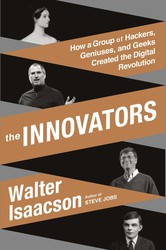
innovators-9781476708690But disruption is nothing new. Just ask Walter Isaacson, president and CEO Of the Aspen Institute and a noted author. He’s the guy who wrote “Steve Jobs.” His latest book is “The Innovators: How a Group of Hackers, Geniuses, and Geeks Created the Digital Revolution.”

In the book, he writes of Ida Lovelace, Lord Byron’s daughter, who pioneered computer programming in the 1840s, and then explores the fascinating personalities that created the current digital revolution.

Isaacson shared some of the lessons from his book during his talk.

The best uses of technology are when we bring people together. “The great thing about humans,” Isaacson said, “is that we always keep up morally with our technology.”

He added, “If we bind our humanity with technology, our technology will always be as good as we are.”

Creativity is a collaborative effort. Seldom is there a light bulb moment when an idea appears. “Real innovation happens together – on a team,” he says. “Innovation is a team sport.”

Vision without execution is hallucination. He added that it’s important to pair a visionary with a team that can execute it. The flip side, also is true, Isaacson said, which means that “without a visionary, you lose some of the spark.”

Keep it simple. Use simple sentences, he said, “if you want to explain exactly what it is you are going to do.”
Working with an Editor

April Michelle Davis edits for a living. She reads lots of books and each one at least three times as part of her editing process.

She identified two types of editors – developmental and copy. A developmental editor focuses on themes, jargon and the big picture she explained at the Virginia Press Women (now Virginia Professional Communicators) spring conference.

A copy editor often is a free-lance editor. She focuses on spelling, style, capitalization and changing passive to active voice. In other words, all the things our English and journalism professors tried to teach us, and that we resisted.

“The author may not care about it, but they know they need it to be published,” she said.

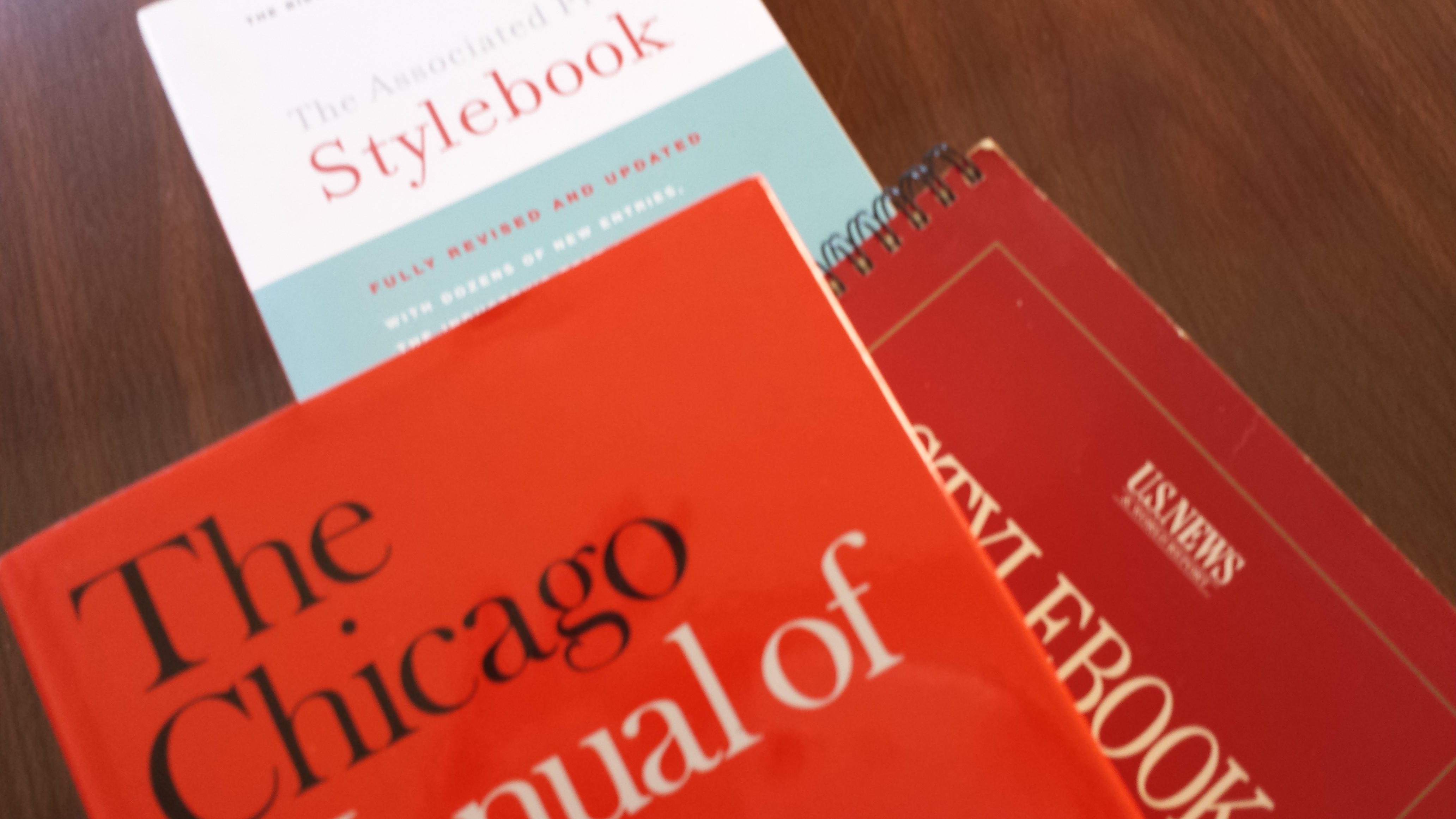
Style guides are important tools for editors. (Photo by Cynthia Price)

Style guides are important tools for editors. (Photo by Cynthia Price)

She uses many style guides, including the Chicago Manual of Style (16th edition is the current one) and Associated Press, but noted that a house style manual will override these.

As Davis reads the book, she’ll also insert style marks, which she said she can do more easily than the designer because she has read the book.

When she edits a book, she does so in track change mode and then locks the changes. The author can then review the changes and note any additional ones or ones that he doesn’t agree to. Keeping track changes locked ensures that the author will complete the process with her.

Davis said a good editor must have experience, be trustworthy and know about technology. “There are no tests to prove you are a qualified editor,” she said.

She gained her experience slowly over time. Payment for early jobs often came in the form of breakfast. As she continued to do a good job, she was able to start getting paid in dollars.

Over time, she gained the trust of authors. Each time she works with an author, she strives to understand what they mean. “I need to be careful to not misinterpret what they want,” she said. For example, if an author tells her to “go at it,” she will probe until she understands what the author’s expectations are for editing.

“You don’t want the relationship to be adversarial,” she said. “Communication is key.”

Davis also ensures that all of the systems she and the author use are compatible to ensure that editing changes are not lost.

Finding Time to Write a Book in the Digital Era

The surprising thing about being a writer says novelist Ellen Crosby is “how hard you have to fight to find the time to write.”

Ellen Crosby

Ellen Crosby spoke about her latest book, Multiple Exposure, at the Library of Virginia.

Crosby shared her thoughts on the topic during a talk at the Library of Virginia.

Her editor told her she had to be on Facebook. The publishers “Really believe that’s the future,” she said.

Publishers are less likely to send the authors to a bookstore. “They want the magic of the internet,” Crosby said.

That means she needs to be on Facebook, Twitter and Pinterest. She also writes a blog and maintains a website, although she said, “I have eight visitors on a good day.”

“It’s a very big part of my day,” Crosby said. “I try to do it cheerfully, although I’d rather be writing.”

On her social sites Crosby shares about upcoming book appearances and signings. She also shares tidbits related to her books. She’s currently doing a photo blog, which ties directly to her latest book, Multiple Exposure.

(Courtesy of Ellen Crosby.com)

(Courtesy of Ellen Crosby.com)

Engaging on social does require time and effort. A few tips gleaned from numerous talks include:

  1. Align your social media profile picture with your brand. Use a photo of you that appears on your book jacket or use the cover of your book.
  2. Include a short description of your books and links to purchase books.
  3. Respond to replies and comments. You want to engage with your community.
  4. Plan your posts and tweets so you have fodder and aren’t spending all of your time writing for your social sites instead of writing your book. It’s acceptable to share information related to your subject matter. For example, Crosby can share about photojournalism or wine country.
  5. Cross pollinate. Not everyone will visit your website or follow you on Facebook. It’s okay to use content more than once.
  6. Post photos because they help your posts stand out and they create an emotional connection with your fans.
  7. Ask your fans to retweet and repost or to write mini reviews.

Importance of History Leads to Book on NFPW Leadership

As Marianne Wolf-Astrauskas became more involved with the Illinois Woman’s Press Association and the National Federation of Press Women she became intrigued by the women who created both organizations.

When NFPW celebrated its 75th anniversary, Marianne researched further about the history. It wasn’t until her husband was diagnosed with a brain cancer, ironically, that the history of NFPW came to life.

“Early into his recovery period, I needed to find something to clear my mind,” Marianne said. “During those hours when he was resting or asleep, I would find myself going through the boxes of material I had stored.”

Without even realizing it, Marianne was beginning to pull together the capsules of information for her book, Leadership 1937-2013.

Marianne Wolf-Astrauskas wrote a book on NFPW's leadership.

Marianne Wolf-Astrauskas wrote a book on NFPW’s leadership.

“The leadership of NFPW has been amazing! Each woman brought something unique and exceptional to the federation. Each had her own style. Each had her own struggles to deal with,” Marianne said. “Collectively they grew a dynamic energy and resolve to the history of women in this country.”

“For me, it’s important for the membership of NFPW to know who came before them,” Marianne added. “More importantly, these first forty remain an important chapter in the history of women journalists and writers.”

History has always been important to Marianne. “History remains important to me because it helps me to understand the how, why and what ifs of my own personal life. It also gives me a greater appreciation for what took place before me.”

The book was published by Dreamers Tapestry, which is owned by fellow IWPA/NFPW members Susan and Art Brauer. “One of the best results of being a member of IWPA and NFPW is the networking,” Marianne said. Once she had her “aha” moment about reaching out to the Brauers the plan to publish came together.

During the fall conference in Utah, Marianne surprised attendees by presenting a copy of her book to each of the NFPW presidents at the Saturday night banquet. She also presented everyone else in attendance with a copy. Her husband Jonas was beside her beaming with pride at what Marianne had accomplished.

Editor’s Note: Copies of the book are available for purchase through the Illinois Woman’s Press Association website . A portion of the proceeds are split between the Education Funds of NFPW and IWPA.

How Not to Write a Book

If you want to learn how not to write a book simply ask an author who has gone through the process.

Julie Campbell and bookJulie Campbell, who wrote The Horse in Virginia: An Illustrated History, shared what she learned as the result of her research and writing at the 2013 NFPW Conference in Salt Lake City. For her it comes down to three areas of focus – payment, procrastination and publicity.

Payment As a first-time author when Julie was offered a flat fee contract she simply signed the contract. “I realize now that I should have negotiated for more money,” she told an audience at the NFPW 2013 conference in Salt Lake City. “I didn’t make any money.”

Her contract did not include expenses, so Julie paid for gas, hotels, meals and photocopies incurred as she researched the book and later when she went to book signings. “I would negotiate my expenses if I had another project,” she said.

“Next time, I will get an agent,” she said.

Another thing Julie would pay closer attention to is how many advance copies of the book she would receive. Her contract only called for her to receive two copies of the book.

Procrastination Ten years past from the day Julie signed the contract until the book was published. “Life just gets in the way some times,” she noted. For her life included a job change, a move, a broken knee and sometimes feeling overwhelmed by the project.

“It was an enormous project and it really freaked me out,” she admitted. Julie quickly learned to break the research and writing into small segments. “If I just focused on one chapter, I felt fine.”

Until then, she spent time purchasing office supplies and organizing her work space.

Publicity Julie admitted that her image of being an author focused on the “good old days,” including visiting the publisher’s office in New York for lunch. Instead, she discovered “you are on your own to do your book publicity.”

She noted it’s important to ask how much PR the publisher will do and how much you as the author will have to do.  Julie suggested to her publisher where to send review copies.

Julie also credits NFPW seminars she attended with providing her with some good tips to generate her own PR. One suggestion she picked up was to take pocket folders and insert her business card and several pages from the book to send to bookstores to make them aware of her book.

Julie also created a Facebook page for the book.

Despite these frustration, Julie said, “I am thrilled to have the book to my credit.”