Mortenson Promotes Peace, Not Fear

Last evening I heard Greg Mortenson, author of Three Cups of Tea: One Man’s Mission to Promote Peace One School at a Time speak at a sold out Richmond (VA) Forum.

I haven’t read the book yet, but it’s moved to the top of my list. His words resonated with me because I work for ChildFund International, an international child development organization dedicated to helping children in 31 countries be empowered to grow and change their lives.

He’s a sought-after speaker and his book made it the bestseller list for many weeks. But his fame didn’t come overnight. Like many authors, it was a difficult road.

The subtitle of the book was originally about fighting terrorism because the publisher believed it would sell more books since it was being published in the aftermath of 9/11. But the author knew that wouldn’t work because “fighting terrorism is about promoting fear.”

He made a deal with the publisher that if the book didn’t sell well in hardback, the publisher would change the subtitle to the subtitle about peace. When the book did not do well in hardback, Mortenson reminded his published of the deal. When the book was published in paperback the subtitle was changed and sales took off.

Mortenson spoke about how peace is based in hope and the need to empower people “so they can lead their destinies.”

His first school took a while to build, Mortenson admitted, because he was micromanaging the work. But then he turned it over to the community and six weeks later it was built. “You have to let go and empower the community,” he said.

The growth of schools in Afghanistan and the educating of young girls has grown exponentially. In 2000 only 800,000 children, mostly boys, attended schools. By 2009, 8.4 million students attend schools and 2.5 million are girls.

When girls attend school until at least the fifth-grade, a country will see reduced infant mortality, reduced population explosion and an improvement in basic qualities of health and life, Mortenson said.

He noted that there is an African proverb he learned as a child in Tanzania, “If you educate a boy, you educate an individual. But if you educate a girl, you educate a community.”

His new book, Stones Into Schools: Promoting Peace with Books Not Bombs, in Afghanistan and Pakistan, came out in December.
Reading to Learn about New Media

Who says books are going the way of the dinosaur? Sure, there are Kindles and Readers, but when you’re working at your computer trying to figure out Facebook, SEO or just what the next big communications trend will be, a book is a helpful and welcome tool.

Since I’ve been writing about social media frequently since starting this blog, I wanted to share five books that you might find of interest.

1) “Tribes: We Need You to Lead Us” by Seth Godin makes clear that the Web has eliminated the boundaries that often prevent tribes from forming.  Now that any group can become a tribe, who is going to lead them?

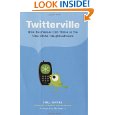
2) Twitterville: How Business Can thrive in the New Global Neighborhoods by Shel Israel shares revealing stories of Twitterville residents. On Twitter, which is dominated by professionals, word spreads quickly.

3) “Now Is Gone: A Primer on New Media for Executives & Entrepreneurs” by Geoff Livingston with Brian Solis started as a way for Geoff to share the epiphanies he had with regards to the changing communications landscape. I met Geoff about six months ago and then worked with him on a Twitter campaign.

4) “The New Community Rules: Marketing on the Social Web” by Tamar Weinberg will help you understand how social web technologies work, and learn the most practical and effective ways to reach people who frequent these sites.

5) “The Truth about Search Engine Optimization” by Rebecca Lieb is the book for you if you don’t know what SEO stands for. This book isn’t going to give you the technical know-how you’ll need but it is easily digestible and gives you and idea of what you need to do with respect to SEO.

A Perfect Storm

Lucinda Roy, author of No Right to Remain Silent: The Tragedy at Virginia Tech, believes that education is heading to a perfect storm. Although she said she was warned not to write the book, she did so because “I believe we have to speak openly if we are to prevent these tragedies.”

Roy shared her comments during Virginia Press Women’s fall conference when she was honored as its Newsmaker of the Year.

Roy lists 10 reasons why education is heading to a perfect storm —

1) Shortage of teachers

2) Lack of mental treament facilities for students

3) Accessibility to gun and bomb making information on the Internet

4) Mental illness and suicidal tendencies in students

5) Non-teacherly focus of presidents, deans, who have not taught

6) Pop culture exposure to excessive violence

7) Growing divide that separates youth culture and adult culture

8) Prevalence of bullying in K-12

9) Rise in alcohol, drug abuse

10) Open campuses with littel security

She wrote the book because “We have to speak out,” she said. “We can’t let it happen again.”

VPW’s Newsmaker: Lucinda Roy

Virginia Press Women honored Lucinda Roy as its Newsmaker of the Year during its fall conference. Roy, author of No Right to Remain Silent: The Tragedy at Virginia Tech and herself an alumni distinguished professor at Virginia Tech, said she liked to think of herself as “a cross between Mary Poppins and Tina Turner.”

She moved into creative non-fiction because of the tragedy at Virginia Tech, which she said was not an anomaly. “There are many other disturbed people like him,” Roy said.

Writing the book was difficult. She spoke out before the tragedy and in the aftermath. The result is that some people are angry at her and won’t talk to her. “We have to speak out,” Roy said matter of factly when she accepted the award. “We can’t let it happen again.”

She shared how she contacted everyone from police to counselors to the office of student affairs. “I was worried that the information would remain in a pocket so I contacted everyone,” she said. She believes they tried their best but that they were constrained by policy – that of student privacy.

Roy wrote the book because she believes the tragedy at Virginia Tech could happen again.

Next time: Roy believes education is heading to a perfect storm. Why?

Library of Virginia Announces Winners

Adriana Trigiani hosted last night’s 12th annual Literary Awards at the Library of Virginia. As always she was engaging and humorous, connecting everyone. It’s always great fun to see her. She’s  a wonderful author who gives back so much to the book world. By the end of the evening, everyone would be conversing via Facebook. And only she could get by with calling Roger Mudd “eye candy.”

He was the winner of the People’s Choice Award in nonfiction for his “The Place to Be: Washington, CBS, and the Glory Days of Television News.” The fiction winner was Martin Clark’s “The Legal Limit.”

The gala event was great fun and many Virginia Press Women members attended, including Nancy Beasley, who was a nominee in 2006 for “Izzy’s Fire.” I hope to see Julie Campbell, who is writing a book about the horse in Virginia as a future nominee. Her book is slated to publish this spring.

VPW member Emyl Jenkins, whose latest book is “The Big Steal,” presented the fiction award to Domnica Radulescu for “Train to Trieste,” which tells the story of a young woman’s quest for freedom and shelter in Soviet-dominated Russia during the late 1970s.” Domnica is a professor at Washington & Lee, where Julie also works. The world of authors is small.

Other winners included Annette Gordon-Reed who won the nonfiction prize for “The Hemingses of Monticello: An American Family.” Lisa Russ Spaar won the poetry prize for “Satin Cash.” The Weinstein Poetry Prize went to Eleanor Ross Taylor and Charles Wright. The Whitney and Scott Cardozo Award for Children’s Literature was awarded to Doreen Rappaport for “Abe’s Honest Words: The Life of Abraham Lincoln.”

Other VPW members attending included Mary Martin, George and Frances Crutchfield, Sharon Baldacci

Literary Awards

Julie Campbell, Cynthia Price, Adriana Trigiani, Nancy Beasley attend the Library of Virginia Literary Awards.

 and Jann Malone, who also served as a judge.

The Literary Lifetime Achievement Award was presented to John Grisham. He writes a novel a year and all of them have become international best sellers. There are currently more than 235 million of his books in print worldwide, which have been translated into 29 languages. His first book, however, he sold from the trunk of his car going to libraries statewide.

Libraries were an underlying theme throughout the evening. Most everyone shared their experiences of when they received their first library card. Grisham, whose family moved frequently, considered a town small time if you were only allowed to check out two books at a time. A good library would allow five.

Books, of course, were the focus, but what of their future? Grisham asked what would happen if the Kindle gained in popularity. Would holding a book, cracking it open and turning the pages go the way of the Internet? It was a weighty question and one that no one in this crowd truly wanted to contemplate.

After all, is there anything greater than opening the cover of a new book eagerly anticipating the discoveries within the pages? It’s magical and that’s what makes the Library of Virginia’s Literary Awards magical.