NFPW Blooms Late, Gathers No Moss

The NFPW conference is just around the corner, and I can’t wait! In addition to the great workshops, the awards and the networking, it’s an opportunity to catch up with friends. I’m always amazed and humbled by the members.

One member, Marlene Cook, is as excited today as she was 40 years ago, to win an award. She recently posted to Facebook, “Holy cow! Just found out I won a first place in the National Federation of Pres Women’s writing contest for a speech I gave at or 60th class reunion. Not bad for the shy kid at Fenger High School who couldn’t speak up in class. Hey, look at me now!!!! Who’d have believed it?”
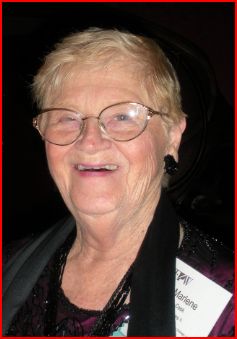
Marlene Cook

NFPW is an important part of Marlene Cook’s life.

Those of us who know Marlene would definitely have believed it. That post led me to ask her to share about her career and involvement with NFPW. Of course, before she could do that, she had to do her daily mile walk and finish her deadline for the church newsletter.

NFPW members never gather moss, that’s for sure.

Marlene was a “late bloomer” to journalism starting at age 30 working for the Harvey Tribune as a correspondent and “gossip” columnist. She also joined Illinois Woman’s Press Association and NFPW. In high school, her teacher told her she would never amount to anything. Can you believe that?

But Marlene proved her wrong, in part, because of the support and mentoring of press women. She gathered information from her contacts as PTA president, baseball auxiliary mother, Cub Scout leader, church guild president and anything else involving her children. Her column, “The Tattler,” allowed her to tattle on her children, as well as friends and neighbors.

Her career blossomed and along the way, she wrote about celebrities, presidents and the queen of the Netherlands.

One thing, hasn’t changed – “The rush when I’m recognized as a writer.” Marlene continues to enter the NFPW communications contest and when she wins, she says, “It certainly doesn’t hurt my ego and it has always helped secure jobs.”

NFPW, Marlene says, is a feeling. “It’s a feeling of belonging, of support, of concern, of security and of love.”

“I belong to many organizations and have many friends, but my NFPW friends are special,” she adds. “I’ve traveled to all 50 states and 15 countries, most of them through NFPW or related opportunities. I’ve done things I could never have done on my own. The opportunities are endless.”

“I was a shy, scared, high school educated mom, believing I’d never amount to anything. NFPW gave me confidence enough to fool that teacher and myself,” she says. “I went on to hold every office in IWPA except treasurer, (president for two terms), national conference director, POPPS president and historian. I’ve also written an award-wining book. I guess I was somebody after all!”

5 Tips to Get the Most From a Conference

Business cards

Don’t just collect business cards. Follow up with the people you have met following the conference. (Photo by Cynthia Price)

Bring Business Cards. A conference is a great opportunity to network. You will want to have business cards to distribute so when you meet someone they will have your name, title and contact details. When I receive someone’s business card, I jot a few notes on the card so I can remember our conversation when I return to my office. Also, if I’ve promised to send or share information I make a note of it so that I can do so. I also send LinkedIn requests so additional networking can occur online.

Review the Schedule. Before the conference begins take some time to review the schedule and speaker bios. Highlight the sessions that you want to attend and make sure that the title aligns with the session description so you aren’t disappointed. Make note of any speakers with whom you would like to have a conversation. I’ve switched sessions after reading a speaker’s bio and realizing they were speaking on a topic that would resonate with me.

Branch Out. When there are meals or networking opportunities, make an effort to sit with individuals with whom you don’t know. Speaking to strangers isn’t always easy, but at a conference you have a good opening for a conversation. Ask why they are attending and what they hope to gain from the conference. Share your reasons for being there.

Build in Down Time. Conferences can be exhausting. Networking is hard work. Sleeping in a strange bed can be a challenge. Keeping up with the office creates challenges. While it’s admirable to want to attend every session and network to all hours, you also need to take care of yourself. Be sure to give yourself some down time if you need it.

Schedule Follow-Up. Following a conference, I’m always reengaged. I have great plans to meet with colleagues and continue the conversations. I schedule the lunches, coffees and phone calls within the first two weeks back; otherwise, I get too caught up in the minutia of my job. If I have follow-up assignments, I try to complete them within a week of returning, if possible.

Pick a Face for Work

I learned early on that as a leader or manager, my team reacts to how I interact or don’t interact with them. No matter what is happening, I try to provide a consistent presence. I’ve been fortunate to work with a business coach, and early on he said to me, “Are you going to show up to work as a leader today?”

That resonated with me, and I took it to heart.

comedy_tragedyEach morning as I drive to work, I think about everything I need to do that day, realizing that there will be surprises. And no matter what my mood is, I think about how I’m going to show up for work. I can’t be ticked off one day and jovial the next – it’s confusing to my team.

I try to be as consistent as possible. Sometimes, though, when I have a large pile of work, I check in with my team and let them know I will be super focused but that I’m still available if they need me. I may not look up as often when they walk past my office, and I may not walk around as much. If I don’t let them know this, they may wonder what’s going on.

If I’m not feeling well – which, fortunately, is rare – I let them know in case I’m a bit grumpy.

I was reminded of it again when I overhead a colleague ask another colleague if she was annoyed at her. She wasn’t, but she was focused. Still, there was a perception problem.

How do you show up to work?

Lunches Fuel Networking Opportunities

Fork_KnifeLike many people, I frequently eat my lunch at my desk. I at least try to use that time to catch up on online reading. However, I am guaranteed at least two lunches outside the office each month.

It’s a professional goal I established for myself many years ago – namely, to connect with colleagues at my workplace and with colleagues within my profession. Each month I schedule lunch with a colleague where I work. It’s a time to take a break and to get to know each other better. We also usually share work-related information. One colleague, for example, has helped me develop a better understanding of the budget process. Another colleague and I discuss leadership and team building. Mainly it allows for the connecting to happen that often doesn’t in the office because we’ll all too busy.

I also connect with peers. It’s a great way to learn what others are doing. We share frustrations, and I find it’s always good to know I’m not alone. Even better, we work to find solutions. We also share best practices and bounce ideas around. I always return from these lunches reinvigorated.

Turns out this a great tool. In his book Never Eat Alone, Keith Ferrazzi says that social settings are a great way to reach out to colleagues and future contacts. Ferrazzi is founder and CEO of the training and consulting firm Ferrazzi Greenlight and a contributor to Inc., the Wall Street Journal, and Harvard Business Review.

Some months I’m able to get a few extra lunches onto my schedule. And sometimes I find breakfast to be the perfect time to reconnect because it’s usually a shorter time since we’re both ready to get to the office and because it’s the start of the day, we usually have lots of ideas.

How do you connect?

Time To Schedule Time Off

Utah logo

NFPW Conferences feature tours, which make for great vacations.

Earlier this week I took a random day off. It wasn’t spontaneous because I scheduled it with my boss in advance, but it was random in that one day last week I realized I needed a day off to do nothing.

I’m able to do that because at the start of each calendar year I divide up my days off among the four quarters. I find it restorative to take some time off each quarter. Admittedly, I don’t take as many days in January, February and March because it’s just too cold. Some of the days are floaters, meaning I may change when I take them closer to the time.

The point, though, is to schedule the time off and to take the time. Many Americans, however, will leave an average of nine paid vacation days unused this year, according to a new survey reported by Marketplace.org.

Not taking the time has a cost. Marketplace.org also reports that women who don’t take vacations are two to eight times more likely to suffer from depression, while for men the risk of heart attack rises by a third.

One of my favorite times to vacation happens in late summer/early fall. I attend the National Federation of Press Women Conference and sign up for the pre- or post-tour and sometimes a day tour. Those extra days off give me time to recharge my batteries, explore America and hang out with a bunch of amazing women (and men).

If you haven’t, now is a good time to be sure you have scheduled all of your vacation days.