6 Steps to Overcome Procrastination

I don’t typically think of myself as a procrastinator. I am decisive, meet deadlines and use lists to track long-term items. However, if I really look at how I work, I have to admit that sometimes I let things slide.
Clock

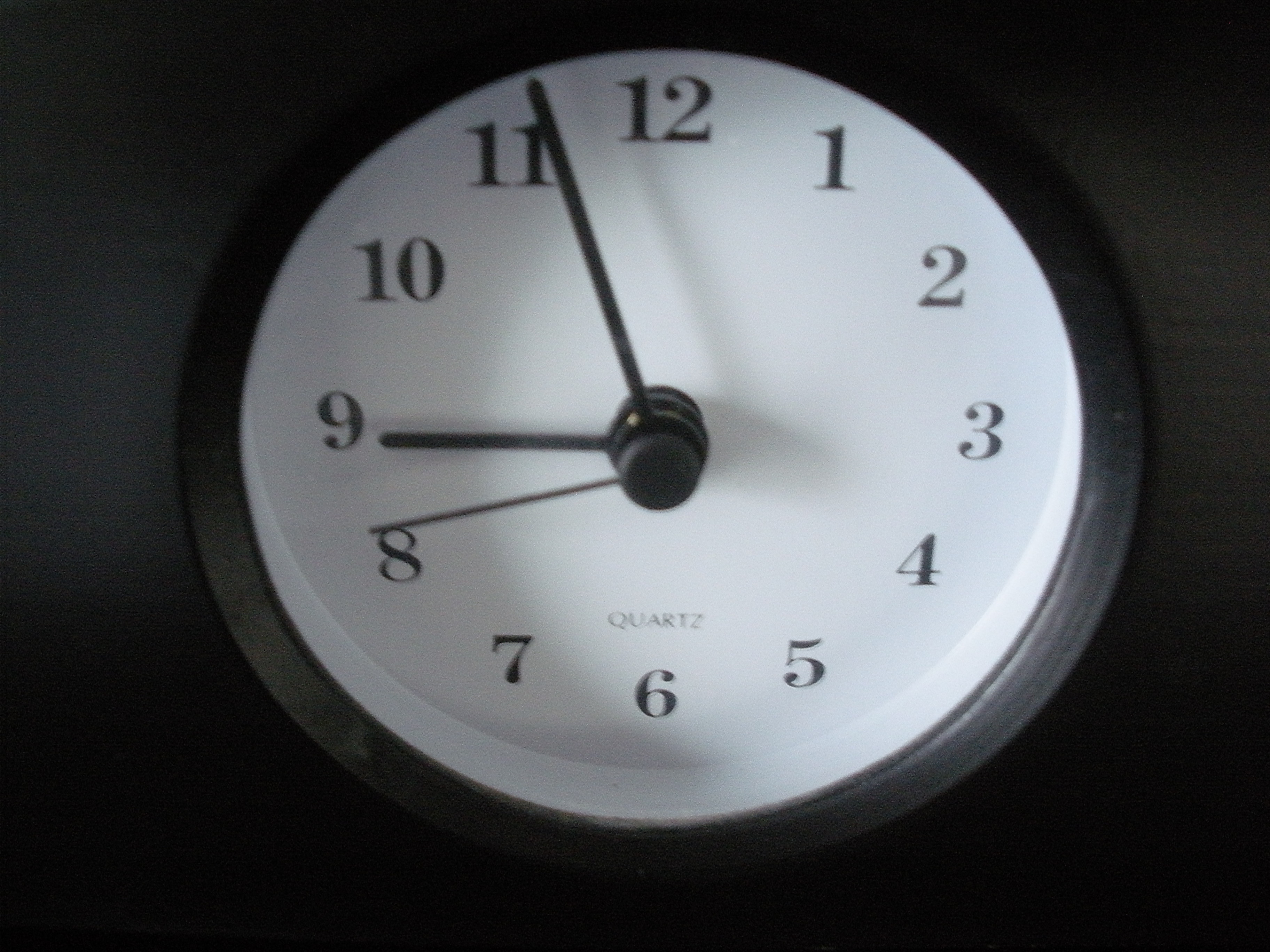
When you procrastinate, deadlines can be missed. (Photo by Cynthia Price)

Unfortunately, I’ve done that a lot in the past few months. That’s when it hit me – I’m tired. So it was easier to not do the things on my list and to not respond to emails. Instead I’d mindlessly watched TV and became lost in a good book.And now I realize I’m really behind on several commitments. What to do?

As “they” say, the first step is admitting you have a problem. Okay, check. Now what?

I made a list of what I needed to do and then broke each item into smaller pieces because often what was stopping me was the fact that one item actually was four or five items and I didn’t have that much time or energy.

I was inspired to do this after a friend shared with me about her inspirational speech she gave at Toastmasters. The speech was built around five quotes, and this one really resonated with me: By the inch, it’s a cinch. By the mile, it’s a trial.

Writing everything down, although daunting, also was helpful. I then divided the list into reasonable chunks and set deadlines.

Next, I tackled the first chunk. I set aside most of a Saturday and made myself complete the items. It was a mix of home repairs and commitments to organizations so I went back and forth until that chunk was completed. I rewarded myself with a movie rental and crossing off all those items from the master list.

Suddenly, I could see progress and the items didn’t seem so overwhelming.

Inch by inch, you can overcome the procrastination. Here’s how:

  1. Admit you are procrastinating.
  2. Make a master list breaking each item into smaller pieces.
  3. Create chunks on which to work.
  4. Set deadlines.
  5. Tackle the first chunk.
  6. Celebrate.
  7. Repeat steps 1 through 6 until you are back on track.

Audit Your Job

Are you in a rut with your job? Are you thinking about a change, either within your company or outside of it?

Before you do, take the time to audit your current job. Doing so will tell you what you like and don’t like in a job and may help guide your future choices.

Start by listing everything you love about your job. Is it the flexible work hours? If so, you don’t want to work for a company that requires you to be in the office during set hours. Perhaps, it’s the ability to serve on committees that allow you to learn about other functions within the organization. Whatever the reasons, list them.

Sometimes just reminding yourself about what you enjoy about your job makes it easier to handle the frustrations. I frequently speak about my job to civic groups, and I always get so excited when I talk about the work. It reminds me how much I enjoy it, even with challenges.

What would you change about your job? I started my career as a newspaper reporter. Every day was a new story pursued outside the office. That remains one of my biggest frustrations – feeling cooped up inside an office. To alleviate that feeling, I leave the office at least once a week to meet someone for lunch. That dose of fresh air and a different environment work wonders for me. I’ve also been known to hold team meetings at Starbucks.

What goals do you have for the coming year? Do you want to learn something new? Have you spoken with your supervisor about it? Maybe it’s taking a class after hours and you need to leave an hour early. Don’t assume your supervisor won’t accommodate you.

Once you have set your goals – both the ones you agree to with your supervisor and the extra ones that you may have – be sure to track them.  Create a folder to capture your accomplishments. This helps you track your progress and also prepares you for performance reviews. If you’re in the communications field and enter contests, it’s also a great way to prepare your entries.

I set aside time once each quarter to review my progress and adjust my course as needed.

Once you’ve completed your audit, you’ll have a better idea of what is working for you and what isn’t.

4 Reasons to Join NFPW (or Any Professional Group)

When I was a rookie reporter, I joined the National Federation of Press Women, or NFPW, because I heard it would be great for networking. I figured if I was a member, when I applied for my next position, I would be ahead of the competition. It doesn’t quite work that way, of course.

Networking does play a role, but, as I’ve learned, it’s about give and take. Professional groups also help with other areas, including:

Networking. In the early years, I really didn’t have much to contribute as I was busy learning the ropes. However, many members were kind enough to impart wisdom to me, which I eagerly accepted. When I need contacts in other states, my NFPW peers always connect me with the right people. And now that I’m in a position to help, I always agree to information interviews and seek out new members and assign them a short-term role that would provide them with more exposure with the group.

Opportunities. I’ve organized conferences at both the state and national level. Putting together conferences has really honed my event planning skills. In my previous job, I had to put together awards ceremonies, special events and graduations. They all turned out fine because I applied the skills I had developed organizing conferences to these events.

One of my early forays as a newsletter editor was for my state affiliate, Virginia Press Women. Later I would go on to create an award-winning newsletter for one of the agencies with which I worked.

My first exposure to social media was during a workshop at a national conference. At the time, I thought, “This is too confusing.” Who knew that years later, I’d write my own blog and be on Twitter and Facebook. And that there would be lots of other platforms to try out, too, including Pinterest and Vine.

Professional Development. I attend conferences at the state level and the national level. Not only do I get to learn about trends, I also get refreshers in basic skills. Conferences also provide me with space to think and plan.

Another way that I improve my skills is through the annual communications contest. Of course, I like winning, but the judge’s comments are helpful, too. It forces me to think about how I could have executed a project better. I’ve also judged and reviewing entries makes me think about how I might approach a project differently.

Virginia Press Women learn about farming in Nebraska.

Virginia Press Women learn about farming in Nebraska.

Expanded Viewpoint. One of the benefits of NFPW is the travel to a different conference location each year. Many organizations do the same thing, but too often attendees don’t venture from the hotel. NFPW always arranges a tour (or two) at some point. It’s a great way to learn about another part of the country. I’m always surprised how I’m able to weave the facts I learn about a region into my work, usually as a means to open a conversation with a person from that area.

Another huge benefit for me that has nothing to do with professional development; it’s the friendships I have made. I delight in having friends scattered around the country.  It’s a great way to really know what is going on outside my state. And I always know I have someone with whom I can visit if I have an extra day.

What do you get from your professional memberships?

How to Be A Great Guest Speaker in the Classroom

For several years, I was an adjunct instructor at a university. It was a great experience for me because the students asked tough questions, which meant I had to know my stuff. And I’d like to think it was good for them as I could share my real-world experiences with them.

(Photo by Bill Farrar)

(Photo by Bill Farrar)

Several times I invited outside speakers to talk about their jobs and experiences. Almost all were fantastic, but a few weren’t. Here’s what works and doesn’t –

Share about who you are and how you came to the position you currently hold. However, students are savvy and will have looked you up online so stick with the highlights. We don’t need your entire biography.

Be prepared. Don’t just show up to the classroom and ramble. I always shared in advance with guest speakers my expectations, including time limits. Most speakers would then come with some key messages and sometimes handouts. Anecdotal stories are great – if they have a point.

“The best classroom speakers are the ones who can help bring the concepts being studied to life,” says Bill Farrar, APR, and instructor and PR sequence instructor at Virginia Commonwealth University’s School of Mass Communications. “First-hand war stories, visual examples, dos and don’ts, tales of success and failure, and a healthy dose of reality open students’ eyes far more than any textbook every could.”

Allow for questions. Students are curious and while you may not think something is important, it could be the one thing students want to know about.

Be honest. Students want to hear the good and the bad. One guest speaker talked about crisis communications and being on call 24/7. Being in the know can be exciting but giving up weekends, family time and sleep is not so exciting. Students need to know what the challenges are so they can best assess what would be a good fit for them.

Provide contact details. If you are willing, provide students with how to reach you after you leave the classroom. Only one or two will follow up, and they are the ones who are committed to learning and furthering their careers. It will be worth your time to chat with them.

4 Ways to Get Involved with NFPW

I started this blog when I became president of the National Federation of Press Women. It was a means to further connect with members who are located across the country and to share on a variety of topics of interest to members. It was one of the ways I could become more involved.

How can you become involved in NFPW (or any organization for that matter)?

Enter the communications contest. It’s one of the draws for NFPW. This year the contest is online and I suspect, like others, I’ll be a bit challenged by the process. However, I’m starting early so I will have plenty of time to figure it out. I’ve judged online contents previously and it wasn’t too bad. It just took a bit of patience. One of the benefits of the contest is that judges are encouraged to write comments, which is helpful to enhance work going forward. And, of course, if you win, you can feel good about the work you’re producing. Don’t forget to tell your boss! (Editor’s Note: The deadline for state affiliates of NFPW for the online communications contest is Jan. 27.)

Serve on a committee. Not everyone has the time commitment for a board position, but you could volunteer for a committee or a one-time need such as introducing a speaker at a conference. It’s a great way to get to know other members, which can lead to enhanced networking.

Put your skills and talents to work. You could write for the website or newsletter, provide graphic support or serve as webmaster. If event planning is your thing then organize the next outing or conference. Or you could help publicize the event. Putting your skills and talents to work also allows you to build your resume.

NFPW 2014 conference logo

NFPW’s next conference is Sept. 4-6 in Greenville, S.C.

Attend conference. Speaking of conference, mark your calendars for your affiliate meetings and the national conference, which this year will be held in Greenville, S.C., Sept. 4-6. You have nine months to save for your travel expenses, find a roommate and make your arrangements. It’s a great way to learn about the latest in communications, network and see another part of the country. You may even make some lifelong friends.