Protecting Your Privacy on Social Media

Those of us on social media love catching up with each other. We share details of our lives, including vacation photos. But who’s viewing those details?

We all know how to set our privacy settings but that doesn’t mean your information won’t get taken.

MoneyWatch recently posted about things you should never post on Facebook, including your birth date. Of course, if you don’t include that, marketers can’t collect their needed demographics. So one suggestion I’ve heard from marketers is to change your date by a few years so that you are at least within your demographic. Why you’re at it, you can always make yourself younger.

It’s also not smart to post about when you’ll be on vacation or where you’re going. Thieves can find your empty house or they could find your hotel. Wait until you return to share those photos.

And be careful which photos you share. If you received a new car for Christmas, it’s probably not a good idea to show it in your driveway with the house number on the lamp post.

Most know the adage that you shouldn’t post anything you wouldn’t want your boss or you mother to see. It’s good advice. I read a series of comments where those posting said that an employer didn’t have any right to check social media posts. In this market, employers want the best, and they don’t want to have worry about employees who will come in hung over or have so much debt that they might take a little extra.

Social media is a great way to keep in touch. Prior generations didn’t share their personal issues outside of the family. It’s a good lesson in this generation.
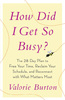
How Did I Get So Busy?

I noticed a reoccurring theme playing out during my weekends. I was always trying to catch up. And even at the end of the weekend, my “To Do” list never seemed shorter.

So this weekend I stopped and read “How Did I Get So Busy?” by Valorie Burton. It’s a 28-day program that promised to help me “rediscover my true priorities, shift out of overdrive and reclaim my life and schedule.”

Of course, I read the book in one weekend instead of during 28 days. And I read a large chunk of it while riding a stationary bicycle so clearly I needed the advice contained in the book.

As the author notes, “The problem with being too busy is that you lose your sense of self. In the race to get it all done, you give up the experience of being fully engaged in anything.”

Fortunately, I am not that far gone. I still enjoy meaningful conversations over a cup of coffee or cooking a meal from scratch for my book club. But I also knew there were areas of my life where I was not being intentional with my actions.

And so I’m now focused on being productive by accomplishing that which matters most. And I’m not going to wear busyness as a badge of honor.

I am going to exercise regularly, as I’ve already shared. In fact, I’ve hired a personal trainer to keep me on track. I’m now cooking meals on Sunday so I have lunches for the work week. I’m not eating at my desk but rather in the break room. Lunch might be finished in 15 or 20 minutes, but at least it is a break. And some days, I take an entire hour. I also have all of my vacation days scheduled.

I’m also focusing more on the journey and not the destination. I’m working on not letting technology intrude. I can be sitting right by the phone and not answer it. I’m still working on ignoring e-mail except during set times.

I’ve changed my approach to my To Do List. At the top I now list my goals for the week, listing no more than three. Then I put on the list those items that will help me achieve those goals. Anything else is not urgent and is not needed on the list. Of course, some of those items may become urgent if they don’t ever get finished so I track them using the Task List in Outlook.

I’m saying “no” more frequently. Before accepting a meeting invitation, I must know the purpose. Otherwise, I don’t accept the request.

I’m also spending quiet time each day. It’s the one I struggle with the most. I started with a minute. I’m working up to 10 minutes each day. No music, no television. Just me sitting quietly being present and not busy.

Are you too busy? How do you get unbusy?

Lessons from Lee Iacocca

Networking works when you are sharing information with others and not always asking someone to help you out.

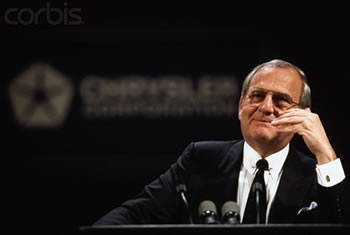
I have a good example of this: The other day I received an email from Jeff Porro, a speechwriter with whom I’ve worked and also the winner of the 2010 Cicero Award for Best Commencement Speech. He was sharing an article he wrote based on interviews with Lee Iacocca’s speechwriting team, on how today’s execs can inspire employees and customers alike with candor and a great narrative.

Most likely, I would not have come upon the article on my own, and yet the article contained valuable information for me. I write speeches and am a guest lecturer.

When writing I sometimes get caught up in trying to convey specific information. That’s important, but there is something that is even more important, Iacocca says.  “In every speech I give, the object is to motivate.”

When I speak, I’m often sharing case studies or best practices so for me, it’s about motivating my audience to adopt or embrace the practice or, at the least, consider how they are working and if it’s optimal.

I also learned that Iacocca “always spoke from a script, never spoke off the cuff,” according to one of his speech writers. The key, though, was that he rehearsed it until his delivery sounded natural and relaxed.

Speech writing and speech delivery is not easy, which is why considerable time must be devoted to both aspects.

Thanks for sharing the article Jeff! 

Developing a Content Strategy

I recently wrote about how book authors have to do much of their own PR and that often involves social media. For many, it’s a challenge because they are already busy writing their books.

So what is an author to do, or for that matter anyone who is looking to use social media to promote their business? It comes down to having a content strategy.

To develop my strategy I needed to look at three areas – audience, location and measurement.

As with any PR effort, the first thing to do is to identify your audience.  My audience is members of NFPW and prospective members. I knew that I wanted to reach members of NFPW on a regular basis. I also knew that many members were like me – they already received too many emails. And I wanted to use a social media platform so that members would become more familiar and comfortable with social media.

Facebook was out because I couldn’t tell enough of a story, although I’ve found that it’s good to link my blog to my Facebook account. Twitter was no good because at 140 characters I would never finish a thought! And for many members, Twitter is simply too overwhelming. The ideal place was a blog. So I started Cynthia’s Communique.

I had the first two areas covered. Now I had to measure how I’m doing. Each month I review the stats that are available to me on WordPress. My goal is simple – I would like to average more than 300 hits a month. I’m not consistently there yet but I’m getting closer. I am encouraged by the number of comments. It’s nice to start a conversation. I’d like each post to have at least one comment.

My blog does not come easy. As with any writer, I suffer from writer’s block so I try to keep a running list of ideas. I also try to write some blogs in advance so I’m not always on deadline. This is especially helpful when I’m traveling; at least I don’t have to worry about finding a WIFI spot.

I’ve already made my calendar for the year, noting all the days that I will publish. I’ve gone through and marked when the NFPW conference will be held (Sept. 8-10), affiliate meetings that I will attend and other possible topics, such as National Letter Writing Week or Resume Month. I sketch out potential topics and fill those in, too. Before long, it doesn’t look so daunting.

Writing a blog is rewarding, but it’s also a commitment, and I have to treat it that way, which is why I have a content strategy.

Mouse Jiggler Keeps Mouse Active

During the holidays I watched several movies on my laptop by dowloading them from Netflix. I would get so engrossed in the movie that I would forget to jiggle my mouse, and the next thing thing I knew the screen was dark. Of course, as soon as I jiggled the mouse, the movie was again visible but it would take a second or two and sometimes I missed seeing something, especially in the thrillers.

This also happens to me when I’m giving a PowerPoint presentation. Most of the time, I’m moving the mouse at regular intervals as I advance the slides. But every once in a while, a good discussion will start and suddenly the screen is dark. You know this has happened because everyone stops looking at you and glances toward the screen.

And yes, I know I can disconnect this feature, but I don’t actually want it disconnected all the time, just sometimes.

I recently learned of a cool way to fix this. Mouse Jiggler is a tiny, handy utility whose sole purpose in life is to jiggle the mouse cursor for you, so that the screensaver doesn’t kick in. It also has a feature called “Zen jiggle.” I love that name!

Anyway, its purpose is to jiggle the mouse “invisibly” so that your computer thinks the mouse is moving without the cursor actually having to move.

Check it out at http://mousejiggler.codeplex.com/.