Tips on How to be a Communications Contest Winner

Contests are a great means to showcase your talent and expertise. Not only do you receive feedback from judges, but earning an award gives credibility to your work. How can you improve your contest entries and your chance of winning?
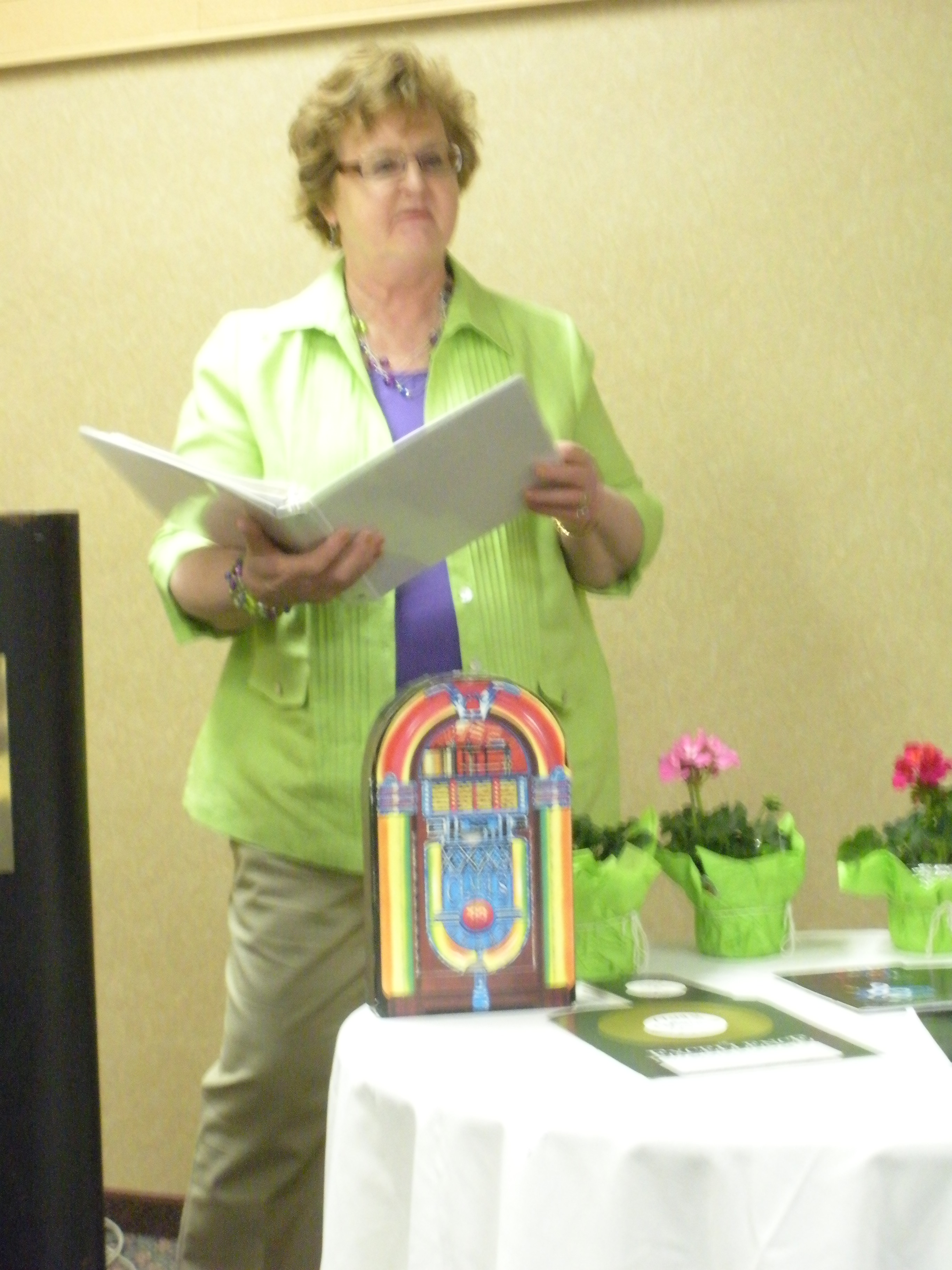
Cecilia Green shows off a winning entry.

Cecilia Green of Illinois Woman's Press Association shares tips for entering a contest.

Cecilia Green of Illinois Woman’s Press Association shares some tips:

1) Be passionate. Pick the project or article that you worked on that you felt passionately about. “If you feel passionate about it, it was probably excellent work that had an impact, something that judges look for,” says Cecilia. Volunteer work counts, too.

2) Follow the instructions. “People don’t follow the instructions,” Cecilia says. “You don’t want to be disqualified because you didn’t follow the instructions.” Use a highlighter to mark “must do” rules, including deadlines and fee. Make sure you submit your entry in the correct category.

3) Give them what they want. Many categories call for a one-page statement covering certain points. Label these points in subheads with details below each one, showing how your work contained the factors you’ll be judged on. “You can have the best project in the world, but if you don’t make your case in the write-up, it won’t win,” Cecilia says. “Make it compelling.”

4) Capture your work while it’s available. Pay special attention to Web and other electronic media category rules so you can capture the work while it’s accessible.NFPW Award Winner 2011

5) Give yourself twice the time you think it will take you to prepare your entries. Some entries require write-ups and extensive documentation that can take several hours to prepare.
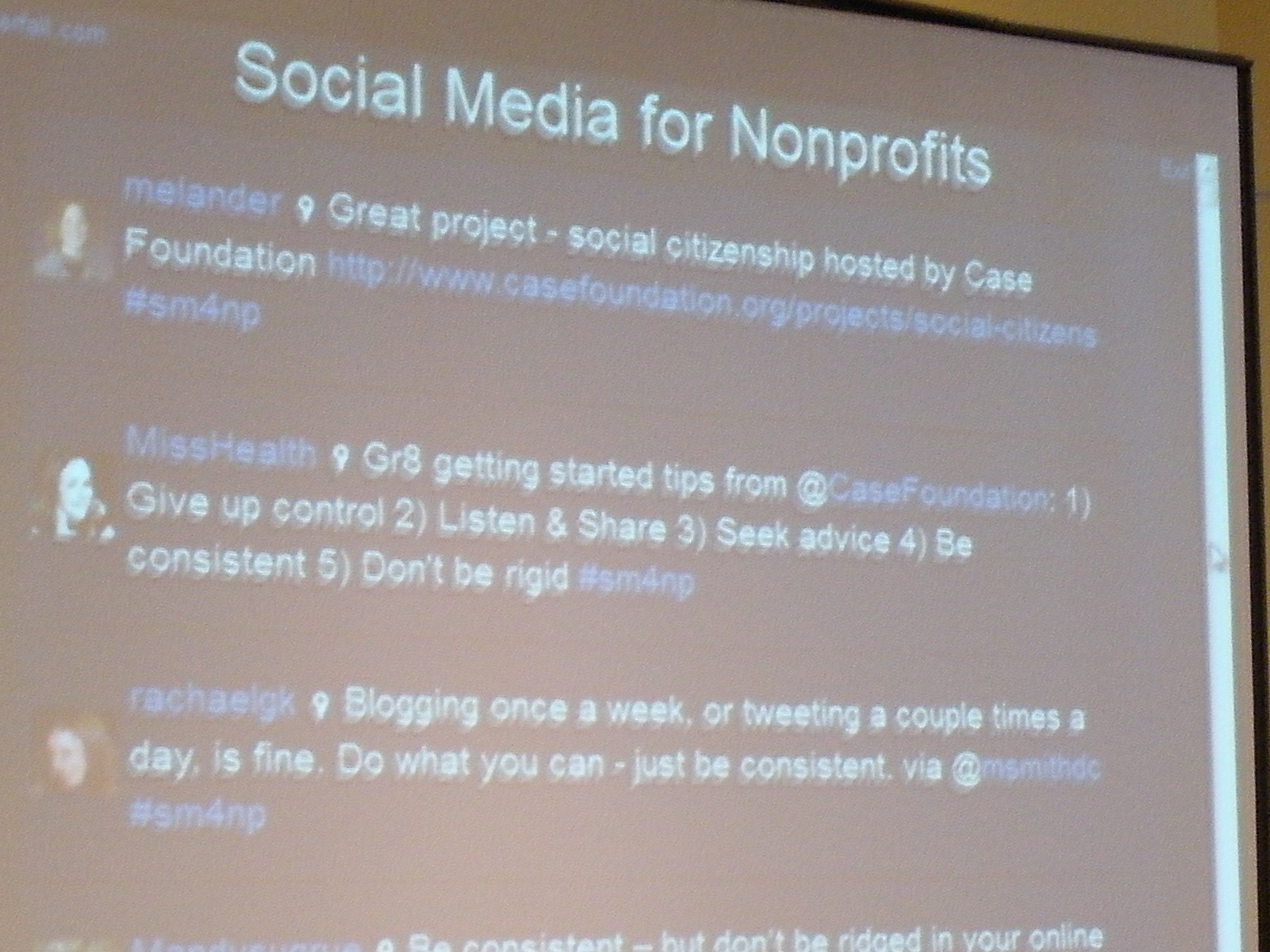
Twitter Feeds — Good or Bad?

More than two years ago, I participated in a social media conference during which there was a live Twitter feed. As a speaker, I found it a bit distracting because there was so much chatter from the audience around the Twitter stream. The audience members were newbies.

Twitter feeds keep audiences engaged during conferences.

Twitter feeds provide real-time information during a conference.

Today, I don’t think twice about a Twitter feed when I’m speaking. In fact, I find it useful after I speak to go back and see what
audience members tweeted. I can see if my messages hit home or if I need to further refine portions of the talk.

As an audience member, I find the Twitter stream helpful. At a recent social media conference the speaker’s words generated an idea I wanted to capture. As I typed on my netbook, I realized I had lost the thread of the conversation. Not to worry, I just had to look up at the screen with the Twitter feed to see what key points I missed.

Twitter feeds also are great to keep the room engaged and present. And in between speakers it’s a good way to start a conversation with a colleague. At the social media conference you would expect strong engagement. What was particularly helpful was if a speaker quoted someone or referenced a book or movie but didn’t have all of the details. Invariably, someone in the
audience found the information and either tweeted it or tweeted the link so that everyone else could follow-up.

The National Federation of Press Women is gearing up for its annual conference, and we’re considering a Twitter feed – most likely for the social media seminars. A recent LinkedIn post generated many comments. Response has been mostly favorable with a few worried about the distraction of it. On the other hand, many members have not experienced a seminar with a Twitter feed
so this may be a good way to provide that exposure.

What do you think about Twitter feeds during a seminar?

I Think I Have Phantom Vibration Syndrome

Some days I think my phone is vibrating on my hip. It’s not, but it turns out I’m not alone in this feeling.

Martin Lindstrom, who was a 2009 recipient of TIME Magazine’s “World’s 100 Most Influential People,” wrote a piece for FastCompany.com about Phantom Vibration Syndrome. He describes it as “reaching for a vibrating phone in your pocket, only to discover that it’s not there.”

For me, it’s the result of many years of muscle memory. I worked in law enforcement and was on call 24/7. My BlackBerry was always attached to my hip or close by. It buzzed constantly (relentlessly on some days). And if it wasn’t attached, I reached for it frequently to be sure I wasn’t missing a call or page.

Is my cellphone vibrating or do I just think it is?

The best part about leaving that job was leaving the BlackBerry and 24/7 responsiveness. In my current job, I still have a BlackBerry. I check it frequently, but not obsessively. I’m more present in the moment. I don’t take it to meetings. If I go to lunch, it stays in my wristlet. My friends say I’m less distracted.

But apparently, old habits die hard. I’ll probably always suffer a bit from Phantom Vibration Syndrome. I wonder if there is a cure.

Making the Most of a Conference

The NFPW conference registration is open. If you’re attending conference this year, what are you doing to get ready? Here are a few tips:

1)      Bring plenty of business cards and then make a point to network with members whom you don’t know. If possible, reach out to first-timers and provide them with tips. When you do meet someone and exchange business cards, make a note on the back of the person’s card so you’ll recall the encounter and have a reason for following up.

2)      Plan to follow-up with everyone you meet. That’s the point of networking. Better yet, connect with your fellow members through LinkedIn. It’s a great way to share what you’re doing professionally throughout the year and learn what others are doing. You might want to bring your smartphone, iPad or netbook to keep your social connections up-to-date.


Taking notes is a good way to remember key points to share with others after the session.

3)      Take time to review the conference sessions and highlight the sessions you want to attend. You don’t want to miss any because you overlooked a session in the program. Again, sit by someone you don’t know. Talk with her after the session to see what she thought. What was the key take away? It’s a great conversation starter and an even better way to recall the session later.

4)      Visit the contest display and read what the judges wrote. You can find out what makes a winning entry. I also get ideas for stories and projects when I review the entries. And if you’re a winner, celebrate knowing that you competed with the best and you won!

5)      Finally, allow some time to explore the region. If you have the time and resources, I would encourage you to sign up for the pre- or post-tour (or both). Our members know what’s worth seeing so you’ll get a great look at another part of the country. If you plan to explore on your own, visit the websites now so you can find out what to see and do.

I always make a list of follow-up items while I’m at the conference. As soon as I return to the office I give myself a week to complete the follow-up items. If I wait longer, they don’t get done.  This, of course, means I must go buy a pretty notebook to use at the conference for note taking and list making.

I hope to see you at the conference. Now, I’ve got to run and purchase my notebook – and maybe a nice pen to go with it.

Are You a Distracted TV Viewer?

As I’m watching an episode of “NCIS,” I also am writing this blog. When I’m finished, I need to buy something online. And then I’ll have to update my Facebook page, which may also lead to a game of Bejeweled.

Apparently I’m not alone in my distracted TV viewing habits. An Adweek/Harris Poll shows that Americans are not giving their undivided attention to their TV screens. According to the survey, while watching TV most Americans also

  • Surf the Internet (56%)
  • Read a book, magazine or newspaper (44%)
  • Go on a social networking site (40%)
  • Text on their mobile phone (37%).

The survey did not draw any conclusions as to what the findings mean. And I don’t have time to figure it out because “NCIS” is getting good.