The Myth of Work-Life Balance

When asked about how she creates work-life balance, Melanie Liddle Healey, group president-North America, Procter & Gamble, bluntly told a group at a women and leadership conference, “I don’t believe in work-life balance. There is no balance.”

That doesn’t mean we should all become discouraged. She suggested three ways to have a happy life.

The first, she said, is to know when things in your life aren’t working. Once you recognize that, you can make changes.

Communicating expectations also is key. When she returned from maternity leave, she knew she wanted to be home to have dinner with her family. She spoke with her boss and explained that she would be 100 percent focused on her job between 8 a.m. and 6 p.m. She also asked him to ensure that meetings ended by 6 p.m. He agreed.

Finally, she said to drop guilt. “It will eat you up,” she observed. Instead, she said you should delegate those things that don’t add much value and cherish those that mean the most.

It’s a good road map if only we would follow it.

Pie Champion Has All the Ingredients for Success

Who would have thought biscuits would have anything to do with a career, but they do.

Just ask Francine Bryson, a national pie champion, mom, homemaker and self-proclaimed redneck. Her award-winning desserts have won the hearts of bakers everywhere when she appeared on CBS’s “The American Baking Competition.”

Francine Bryson remains true to herself and excels on the baking circuit. (Photo by Cynthia Price)

Francine Bryson remains true to herself and excels on the baking circuit. (Photo by Cynthia Price)

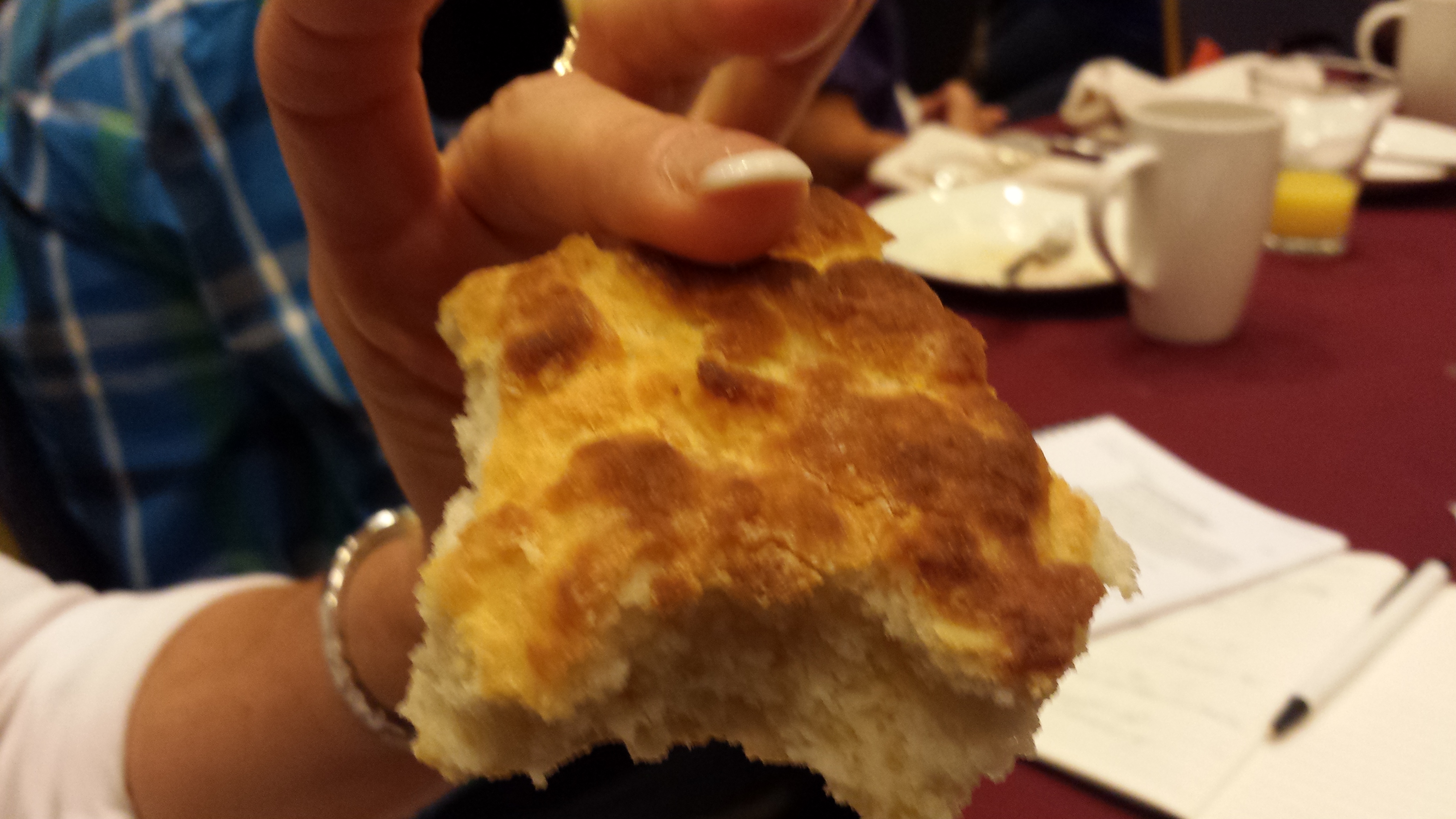
I recently heard her speak, and she demonstrated to the audience how to make biscuits. Many of the step involved in making biscuits also relate to creating a successful career.

The first lesson is to follow your passion. For Francine that’s baking. As a 4-year-old she made a lemon meringue pie. “I’m not sayin’ you could eat it,” she told the audience. Over time, though, she developed her skills and now knows that if it “comes out of an oven,” she can make it.

When it comes to ingredients, Francine said she uses self-rising flour.  “This lets you skip baking powder and baking soda,” she said. “Who has time for all the extra ingredients?”

Another way to look at that is to make sure you have the right ingredients. In the case of work, do you have all of the information that you need to create a PR plan or the elements to write a great story?

Once she had the right ingredients, she put a whisk in the flour to lighten it up. “Sometimes you just need to give it attention,” she said.

That’s good advice, especially, if I apply it to a project. For a project to succeed, I need to give it the appropriate attention.

20140905_091907As Francine mixed the ingredients for biscuits, she emphasized, “Don’t overwork the batter,” adding, “Let the ingredients become friends.”

I realized that sometimes when I’m working on a project, I make it too complex. Listening to Francine I realized I should not overwork or overthink a problem.

As she gently mixed the batter, I thought about challenges I have had at work, and how sometimes I overthink them and fret about them instead of simply quickly addressing them. The advice also holds for making friends with colleagues, even those with whom you don’t directly interact on a daily basis. You never know when you might need to mix in additional knowledge.

Her final advice was to take time to play in the kitchen because “it’s cheaper than therapy.” I admit that I enjoy whipping up a storm in the kitchen to unwind. But even if you don’t like to cook, the point is to make sure you have fun in life.

Now that’s a recipe for success.

Doing What It Takes to Pay the Mortgage

Tiffany Ervin calls herself the “queen of self promotion.”

She has to be if she is going to pay the mortgage.

She has cobbled together a series of positions to do just that. She has worked as a morning radio show host, a keynote speaker, a sideline reporter, a TV host and even a commercial spokesperson. She also owns a clothing boutique.

Those positions came from her passions – speaking and giving back.

As a preacher’s kid, Tiffany listened to her dad in the pulpit and came to understand how to use words to move people. She also was active with the Miss America organization where she learned the value of community service and further enhanced her public speaking skills.
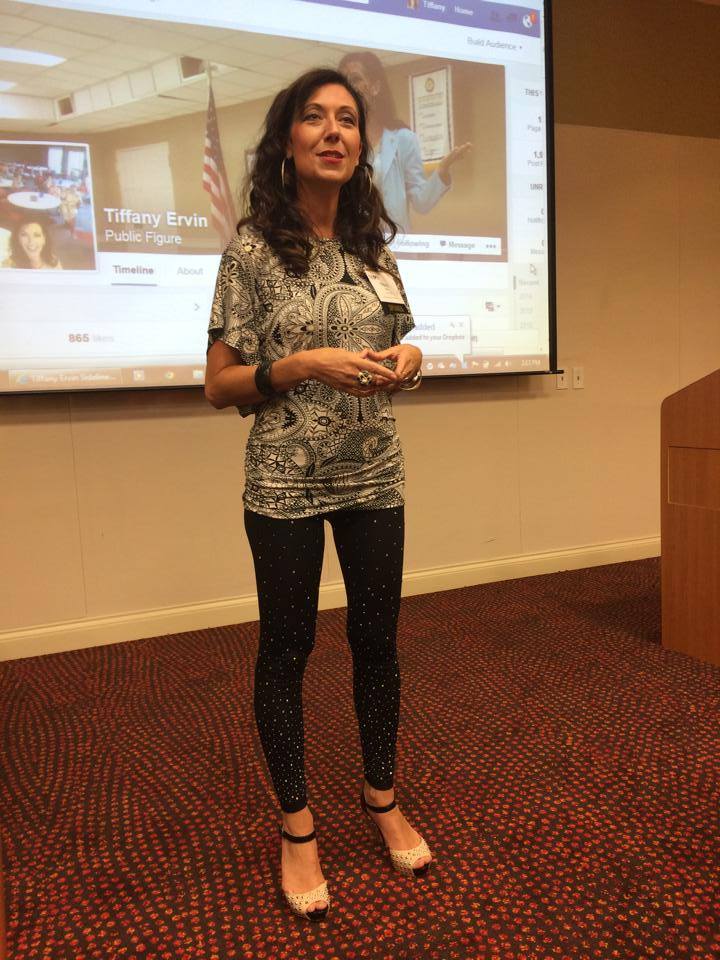
Tiffany Ervin speaks to NFPW members at the 2014 conference. (Photo by Cynthia Price)

Tiffany Ervin speaks to NFPW members at the 2014 conference. (Photo by Cynthia Price)

She followed a fairly traditional path except that instead of working in broadcast journalism she went into public relations and marketing. She oversaw marketing for a hospital. During that time she worked for three CEOs in four years. Tiffany decided it was time for a change.

That’s when she began co-hosting a morning radio show. Next thing she knew, she was doing an infomercial for South Carolina. Other jobs presented themselves, and she became involved with Rotary, which also helped grow her public speaking. She now offers talks called “Breakfast with Tiffany.”

She told an NFPW audience at its recent conference in Greenville, S.C., that “to be a freelancer you have to be constantly evolving and reinventing yourself.”

Part of succeeding, Tiffany stressed, is to find your passion. For her it’s public speaking and giving back. “I’ve had so many great mentors,” she said. “I want to do that for someone else.”

Along the way, she has learned that sometimes she has to make difficult decisions. “You have got to be doing things that give you forward progress,” she said. For her that meant giving up a radio show that required a long commute that cut into other opportunities.

Once you know what you want to do, Tiffany encouraged audience members to network and use social media, both of which involve building relationships.

“Social media is an opportunity to network with people who may be looking for you, and you didn’t even know it,” she said.

Tiffany uses social media to share short clips from her speeches. “It’s great for when someone wants a sample of my work,” she said.

Facebook is good for demonstrating the breadth of what she offers. She finds Twitter helpful for meeting people in the long-term.

At the end of the day, when she has finished all of her jobs, she also knows she has paid the mortgage.

What Did You Learn Today?

I attended a conference in June that had a cool app. The Guidebook app allowed conference participants to review the schedule from their phone, read bios of the speakers and connect with participants.

I was so impressed with the app, I wanted to use it for the NFPW conference. NFPW is an organization in which I am actively involved, although I was not involved in the planning of this year’s conference (whew!). I knew this year’s conference planners already had plenty on their plates so I reached out and asked if they were interested in the app if I created it for them.

20140908_200423Of course, they said yes. I spoke with Guidebook and found out that because our conference wasn’t that large, there would not be a cost to use the app. The downside is that I would not be able to get technical assistance, but I was assured it was intuitive. How hard could it be?

It was worth the time to create it because it meant participants at the NFPW conference would have conference details at their fingertips. Today almost everyone carries a smartphone with them. Keeping track of a conference program can be a challenge.

And I developed some new skills. I had a few challenges, but I persevered. It was a good learning experience, and conference attendees used the app.

Another example is a presentation given at the conference on useful apps. One way to learn is to learn from others. The session highlighted useful apps and then participants shared their favorites. By the time the session ended, we had a list of about 25 additional recommended apps.

Another great place to grow your skills is Lynda.com. This site provides web tutorials on hundreds of topics. You can subscribe for a month or a year. I subscribe for a month when I realize I need to learn about a specific topic. I spend a few hours learning through the site.

Another site to check out is Online Media Campus, which is a partnership of the Southern Newspaper Publishers Association, the Iowa Newspaper Foundation and press associations throughout the United States and Canada. It provides high-quality, low-cost online training to media professionals.

Learning new skills makes good business sense. In her book, Lean In, Sheryl Sandberg writes, “The ability to learn is the most important quality a leader can have.”

What have you learned today?

Step-By-Step Guide to Writing a Strong Bio

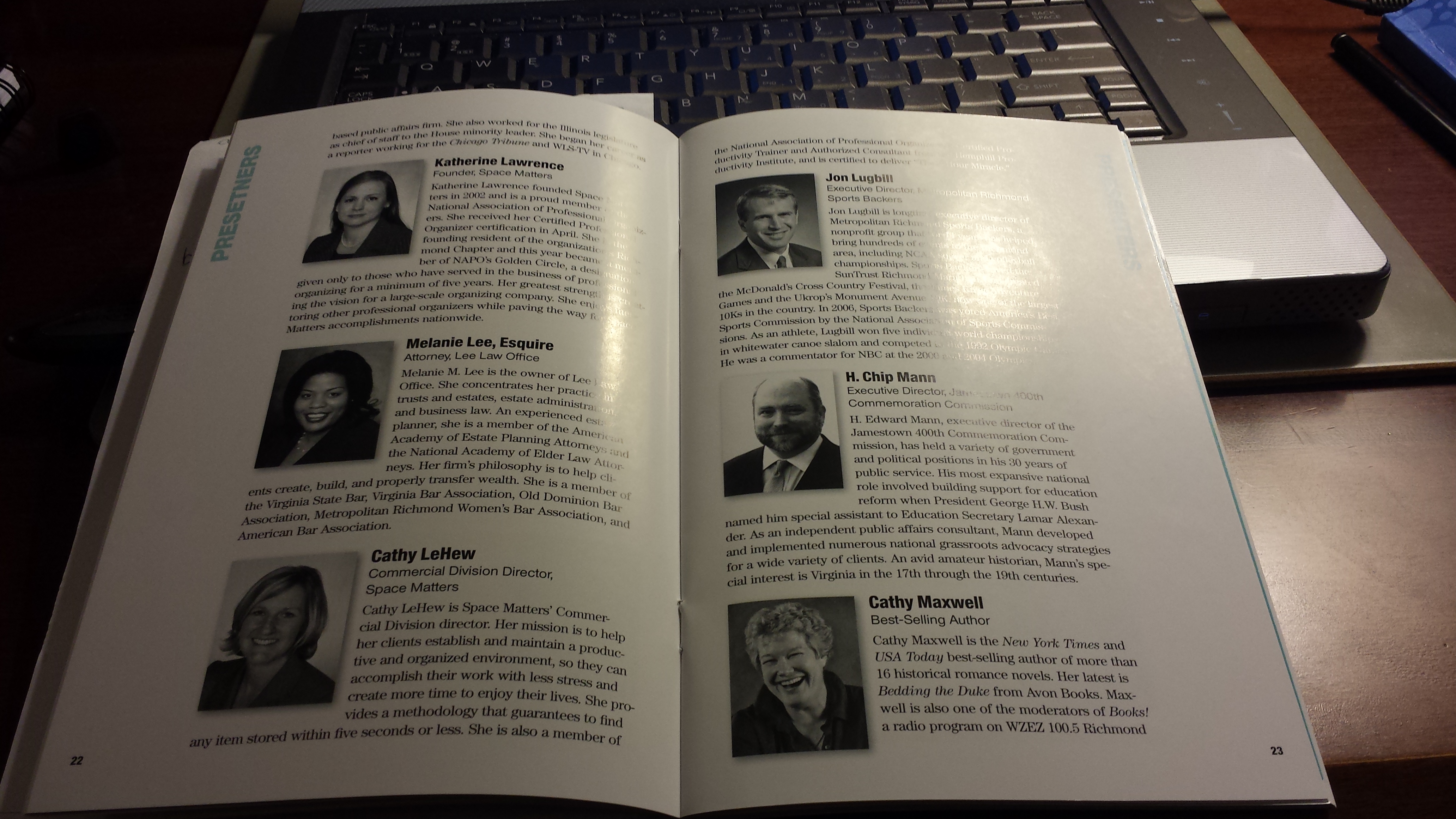
Writing a strong bio helps build your brand. (Photo by Cynthia Price)

Writing a strong bio helps build your brand. (Photo by Cynthia Price)

Have you ever been asked to write a bio, whether as a member milestone or as a speaker? It’s an opportunity to brand yourself and share your uniqueness.

Too often, however, people simply include their name, professional highlights and education without making themselves stand out.

If you want to capture someone’s attention, you should spend time carefully crafting your bio. Here are some tips to do just that:

Identify yourself. Tell the reader who you are and what you do. It also helps to share a bit of your personality, such as a hobby or your community service. I usually include something about traveling or mysteries in my bios, for example.

Share your story. Readers connect with stories so tell yours. Did you overcome an obstacle? Did an experience move you to start a business?

Use a conversational tone. Pretend you are telling your story to a colleague and then write it that way. Skip the big words that may come across as if you are showing off.

Write tightly. Make every word count. If it’s boring to you, it’s probably going to be boring to readers. One way to make your writing stand out is to use the active voice and strong verbs. (This holds true for almost all writing.)

Include a photo. People like to put a face with the name and credentials. (This holds true for LinkedIn, too.)