LinkedIn Celebrates 200 Million Members

LinkedIn InfographicAre you on LinkedIn?

If you’re not, then you may be missing out. LinkedIn announced that it has reached 200 million members and noted that about two members per second join LinkedIn.

It also put together a cool infographic about who has the most LinkedIn members (United States) and the fastest growing countries on LinkedIn (Turkey).

The most followed on LinkedIn are Richard Branson, Barack Obama, Deepak Chopra, Tony Robbins and Jeff Weiner.

I’m not on the site each day the way I am with Facebook. I do get on at least weekly, and more so when I’m recruiting to fill a position. I also appreciate updates from those in my network. I want to know who has a new job or who recommends a book or article to read.

How are you using LinkedIn?

Routines Help Eliminate Stress

Every day I make hundreds of decisions. We all do. What should we eat for lunch? Should I return the call now or later? And then there are the complex ones on the job.

I often tell a friend of mine when we’re deciding where to eat: “You choose, I can’t make another decision.”

Sometimes I don’t have to make any decisions because I do the same thing over and over. Some people would call it a rut. I call it a routine that eliminates decision making. Each morning I eat vanilla Chobani Greek yogurt with a teaspoon of Chobaniwheat germ. I buy individual containers for each day of the month so I don’t have to make the decision to grocery shop more than once a month for them, nor do I have to decide first thing what to eat.

I take the first 30 minutes of my work day to review my calendar and answer any critical emails that came in overnight. Then I tackle the most important item for the day. I don’t have to decide when in the day I’m going to work on that because I’ve already done it.

Many years ago I read a book in which the author (I think it was Alexandra Stoddard) recommended choosing one color – black or blue – as the staple of my wardrobe. I chose black. Now I never have to decide or hunt for the matching socks, belt or handbag because I own no navy and don’t have to worry about choosing incorrectly.

I was reading Vanity Fair recently and chuckled at a comment by President Obama, who, it turns out has simplified his decision-making about suits.

“You need to remove from your life the day-to-day problems that absorb most people for meaningful parts of their day… You’ll see I wear only gray or blue suits. I’m trying to pare down decisions. I don’t want to make decisions about what I’m eating or wearing. Because I have too many other decisions to make. You need to focus your decision-making energy. You need to routinize yourself. You can’t be going through the day distracted by trivia.”

Routines cut down on decision-making which allows us to focus on the important things – whatever they may be.

Small Goals Equal Big Success

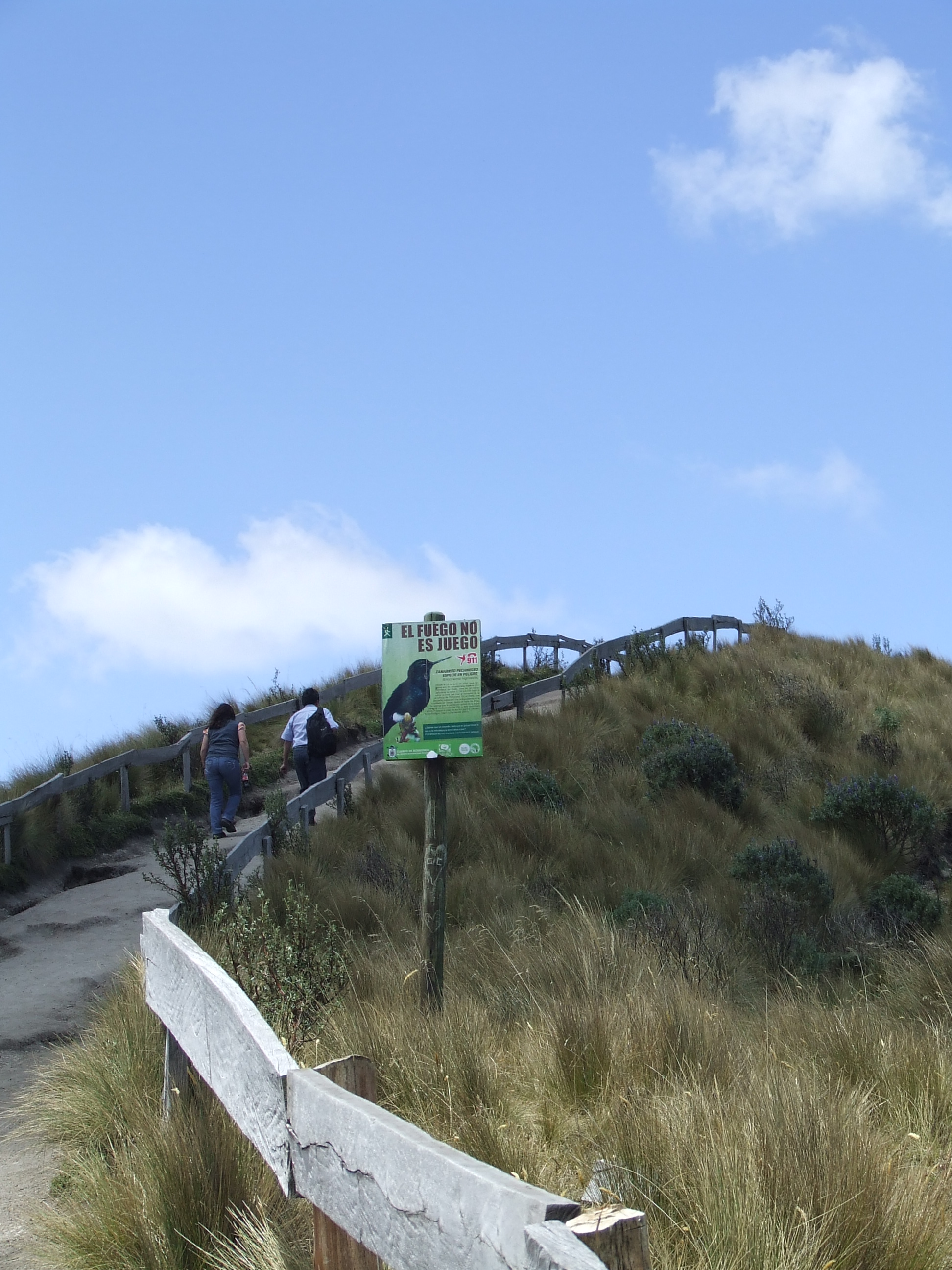
Recently while in Ecuador some friends and I took the TeleferiQo, which is a gondola that takes you up the east side of Pichincha Volcano. When it deposits you, it still leaves plenty of hiking to do. The catch was that we were above 13,000 feet and oxygen was in short supply, and we were short of breath.
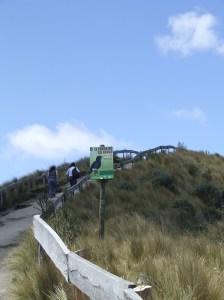
This sign was one of many small goals we set as we hiked.

This sign was one of many that we identified. Reaching it became a small goal.

We saw where we wanted to get to but the distance seemed great. Rather than giving up, we set some small goals. We decided we would at least walk to the first sign that talked about the altitude. At a minimum, we deserved to know how high from sea level we were. Then we decided to make it to the trash can.

We had a series of mini goals and as we reached each one, we gasped for oxygen and cheered ourselves. Before we knew it, we had reached our final goal. Success!

Reaching those small goals kept us going. Teresa M. Amabile and Steven J. Kramer address that idea in their book, The Progress Principle: Using Small Wins to Ignite Joy, Engagement, and Creativity at Work.” “Of all the things that can boost emotions, motivation, and perceptions during a workday, the single most important is making progress in meaningful work.”

It’s why professional organizers recommend cleaning out one drawer or one closet instead of tacking the entire room. Once you’ve experienced the success or organizing and decluttering one space, you’re ready to tackle the next one.

The same advice applies in my fitness efforts. I know how many days I should work out each week and month for my optimal fitness. Sometimes, though, I’m so worn out that the number overwhelms me. However, when I only focus on the next workout, I’m almost always able to complete it, and I feel terrific afterward. More importantly, I’m ready for the next one.

As long as I’m making progress – putting one step in front of the other – not only am I going places but I’m succeeding!

What are your small goals?

A Year of Gratitude

Sometimes focusing on a few details is better than looking at the whole picture.

That lesson can apply to so much in life, whether it’s the big project you have due at work, the house that needs a good spring cleaning or a photography project.

It’s one of the lessons I took away from my photo of the day project in 2012. There are many such project outs there. Some people look for letters in architecture. Some people photograph a menu each day. Mine was simple: 365 Days, 365 Photos.

I haven’t taken a photo since Dec. 31. It feels weird but I wanted to give myself a break. I suspect I’ll still be taking lots of photos but even if I don’t it’s okay because now images are captured in my mind.

I did learn much from my project, including:

  1. I still have lots to learn about photography. I worked hard to capture good images, but I didn’t always succeed. I sometimes ended up with some blurry photos. And you know what? That’s okay because life isn’t always clear.
  2. I definitely was more observant. I learned to look at the big picture – the sweeping vista of a vineyard in Tuscany, for example. I also looked at the details, such as the green olives on the trees that bordered the vineyard.
  3. I smiled more because I was more aware of my surroundings and the simple pleasures of life. I noticed the tiny details – the grace notes – of life.
  4. Even on the most challenging days, if I simply paused, there was much to be grateful for and this project helped me to remember that.

I’ve collected all the photos in a PowerPoint presentation. One slide, one day, one photo (although sometimes multiple photos). When I look through the photos, I realize that nature is a good thing, and I need to spend more time in it. I came to appreciate when the sun set and rose and the different phases of the moon. I was aware of the different cloud shapes.

I didn’t photograph my friends, but rather the experiences we were having, such as book club, dinner out, a walk, shopping.  It led to one of my realizations, which is that I’d rather have experiences than possessions.

Most importantly, I learned I have lots for which to be grateful.