Delve Into a Book (Or Two)

If you haven’t picked up on this yet, I’m a bookworm. I love a good mystery or historical fiction. But I also enjoy books about self-management, strategy and getting ahead.

I recently participated in the Career MasteryTM Kickstart 2019 and was inspired by the webinars. Each of the experts shared tips and proven career advice. This is my third year participating, and it’s a great way for me to jump start the year.

Another benefit is that most of the experts have published books so I can dive more deeply into relevant topics. Here are seven that I plan to read this year –

Stand Out by Dorie Clark

Becoming a recognized expert is a mysterious and opaque process. Clark explains how to identify the ideas that set you apart, promote them successfully, and build a community of followers.

Emotional Intelligence by Daniel Goleman

New York Times science writer Goleman argues that our emotions play a much greater role in thought, decision making and individual success than is commonly acknowledged.

Unstuck by Dan Webster and Randy Gravitt

This is your guide to getting unstuck, breaking free of your comfortable cocoon, and discovering what you are meant to be.

Essentialism by Greg McKeown

I’ve cited this book before, and I am looking forward to rereading it. The Way of the Essentialist involves doing less, but better, so you can make the highest possible contribution.

KNOWN by Mark Schaefer

Becoming known is about approaching your digital life with an intent that establishes the authority, reputation, and audience to achieve your goals.

Fierce Conversations by Susan Scott

This communication skills guide will help you achieve personal and professional success one conversation at a time.
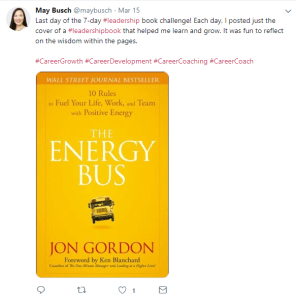
Book ChallengeAs I was compiling my list, I saw where May Busch, who hosted Career MasteryTM Kickstart 2019 was participating in a Leadership Book Challenge on Twitter. People post the covers of seven books they have read on leadership and/or leaders. If you are looking for more selections check out #leadershipbook on Twitter.

And feel free to leave your suggestion as a comment to this post.

Lessons from the North Pole

The other evening I was watching the TV show, “NCIS.” It was the episode in which the origin of many of Gibbs’ Rules was explained. His rules are an extensive series of guidelines that Leroy Jethro Gibbs lives by and teaches by. One of the rules even applies to Santa Claus, which started me thinking about communications and leadership lessons from the North Pole.

Teamwork is important. Rule 15 states “Teamwork is important.” For Santa to get all the presents made and delivered, he needs a team of elves and they need to work together to succeed. Gibbs was reminding his team of the importance of working together to solve a case.

Contingency plans are vital. No matter how much Santa and the elves prepare, they can’t control the weather. Fortunately, Santa has a great back-up plan when the weather is bad. Yep, Rudolph with his nose so bright saves Christmas. (And if you didn’t know, it’s the 50th anniversary of the airing of the holiday special.)

Letters work. Each year boys and girls – both naughty and nice – take pen, pencil, crayon or marker to paper to plead their case about how good they have been and what gifts they would like (and deserve). Some children are texting and emailing, but letters remain the most popular way to reach Santa. The USPS even has a program to handle the volume. If you do hear back from Santa and want to share your letter with others be sure to tag it #SantaLetters.

Merry Holidays!

Leadership Lessons from the Field

Lots of studies have shown that playing sports helps individuals become better team players and future leaders. That makes sense, but I also think it’s important to have the right coach to provide that guidance.

I was fortunate throughout my athletic career (field hockey, volleyball, track) to have great coaches for the most part. I was reminded of this again listening to Gina Lucida, the field hockey coach for the University of Richmond, who recently shared her views on leadership to faculty and staff. I was fortunate to be in the audience.

One of the things she stressed, “If you say things, they have to become real.” For Lucida, she wanted to win a national champion and at UR, she has led the Spiders to three Atlantic 10 Regular Season Championships, two A-10 Tournament Championships and two NCAA Tournament berths.

“If you say things, they have to become real.”

I wanted to become president of a national communications group and I said it out loud and a year later, I was president. Of course, there was a lot of hard work in earning that position, just as lots of hard work is involved in winning championships. But if you don’t say what you want, there is no way to make it real.

Lucida also talked about how leaders must continue to grow. “You constantly have to refine yourself because you are asking others to do the same thing.”

One of the ways I continue to grow is by reading books on leadership and joining with others to discuss them. I also follow bloggers who cover the subject. For about a year I had a coach, too, who helped me continue to refine myself. When I need a tune-up, he’s always available for a call.

Athletes also succeed because they are surrounded by like-minded people. They often live in the same dorm, study together and, of course, practice and play together. “You can’t underestimate the power of like-minded people,” Lucida said.

I belong to several professional organizations, which greatly helps me. Not only do I learn from subject matter experts, I also develop a network of like-minded people whom I can call when I need advice.

Lucida also stressed the importance of focusing on your strengths. While it’s important to know your competition in athletics, you don’t want to spend all of your time focused on them. By focusing on your strengths, she said, you perform at your best.

That’s great advice, whether you’re on the field or meeting a deadline.

Innovating, Succeeding Thanks to Books

Books provide inspiration about innovating and leading. (Photo by Cynthia Price)

The leadership book club I belong to at work just finished a great read about innovating. Next up is one about introverts succeeding in an extroverted world and then one on leadership. I always have found inspiration in leadership, management and self-improvement books, but the impact is even greater when I’m able to discuss the books with others.

If you’re looking for ways to innovate and succeed, here are three books to read:

The Future of Nonprofits: Innovate and Thrive in the Digital Age by David J. Neff and Randal C. Moss: The book jacket notes this “comprehensive playbook demonstrates how to create and launch a new, more flexible, innovative organization that is better equipped to embrace and leverage today’s digital technologies.”

Quiet: The Power of Introverts in a World That Can’t Stop Talking by Susan Cain: “This extraordinary book has the power to permanently change how we see introverts and, equally important, how introverts see themselves,” notes the book jacket.

The Leadership Challenge by James Kouzes: The preface notes this is about “how leaders mobilize others to want to get extraordinary things done in organizations. It’s about the practices leaders use to transform values into actions, visions into realities, obstacles into innovations, separateness into solidarity and risks into rewards.”

What other books would you add to this list?